Ceiling-Mounted vs Wall-Mounted Drying Systems: Which One Is Right For Your Home?
Oct 08,2025 | Smart-Living
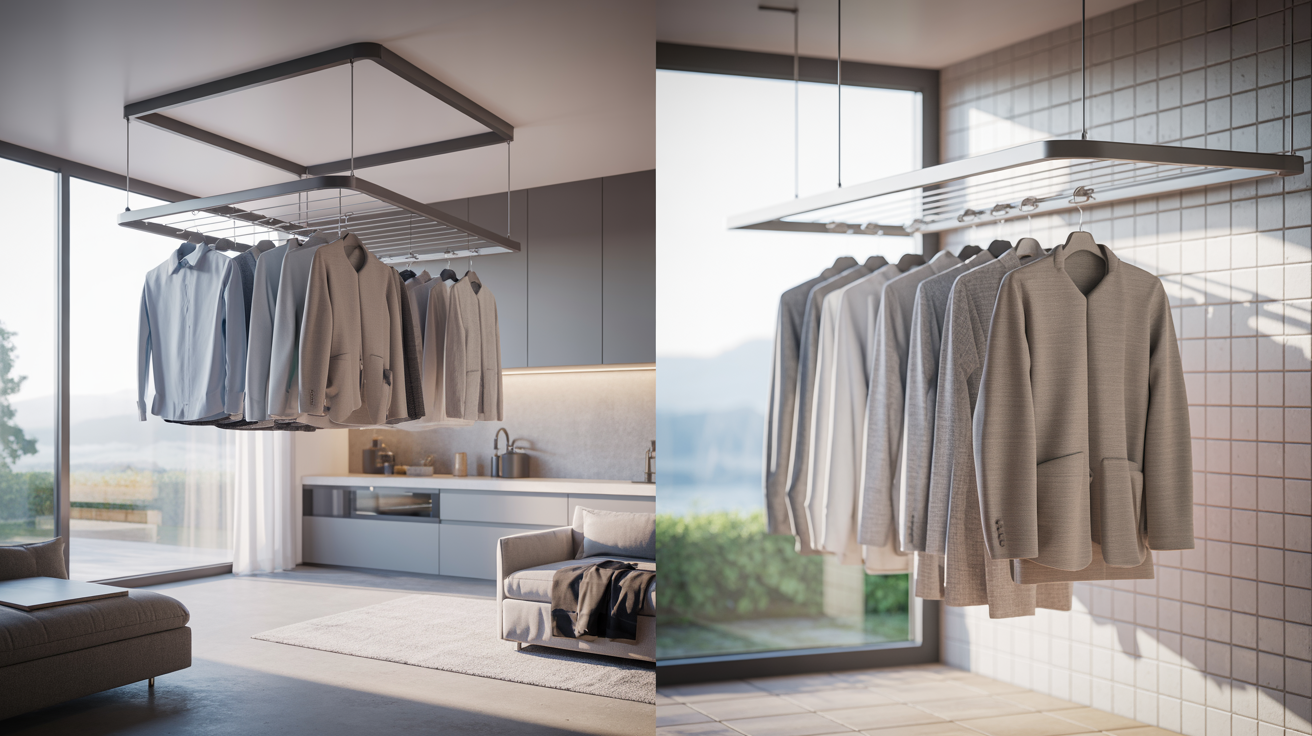
Table Of Contents
- Introduction
- Key Differences Between Ceiling-Mounted and Wall-Mounted Drying Systems
- Ceiling-Mounted Drying Systems: Benefits and Considerations
- Wall-Mounted Drying Systems: Benefits and Considerations
- Space Considerations for Different Home Layouts
- Installation Requirements and Complexity
- Capacity and Load-Bearing Capabilities
- Aesthetics and Design Integration
- Maintenance and Accessibility
- Price Comparison and Value Analysis
- Conclusion: Making the Right Choice for Your Home
When it comes to creating an efficient laundry space, the choice between ceiling-mounted and wall-mounted drying systems can significantly impact your daily routine and home aesthetics. Both options offer distinct advantages for different living situations, but selecting the right one requires careful consideration of your specific needs, space constraints, and lifestyle preferences.
In today's space-conscious urban living environments, traditional floor-standing clothes racks are increasingly being replaced by more innovative, space-saving alternatives. Ceiling-mounted systems utilize overhead space that often goes unused, while wall-mounted options provide accessible drying solutions without taking up valuable floor area. But the decision extends beyond just space efficiency – factors like installation requirements, load capacity, and visual impact all play important roles in determining which system will serve you best.
This comprehensive guide will walk you through everything you need to know about ceiling-mounted and wall-mounted drying systems, helping you make an informed decision that balances practicality, efficiency, and style for your unique living situation. We'll explore the key differences between these two popular options and provide practical insights to help you select the perfect drying solution for your home.
Key Differences Between Ceiling-Mounted and Wall-Mounted Drying Systems
Before diving into the specifics of each drying system, let's establish a clear comparison of their fundamental differences. Understanding these distinctions will provide a solid foundation for determining which option aligns best with your household needs.
Ceiling-mounted drying systems are installed directly onto your ceiling, utilizing vertical space that typically goes unused in most homes. These systems often feature pulley mechanisms or motorized operations that allow you to lower the rack when in use and raise it back up when not needed. In contrast, wall-mounted drying systems attach to your wall surface and typically fold out when in use and collapse flat against the wall when not in use.
The primary functional difference lies in how each system interacts with your living space. Ceiling-mounted options completely clear your floor and wall space when raised, making them virtually invisible when not in use. Wall-mounted systems, while still space-efficient, remain visible on your wall even when folded, though their profile is significantly reduced compared to traditional drying racks.
Another key distinction is their operational mechanism. Ceiling systems require vertical movement (up and down), while wall systems use horizontal movement (folding in and out). This difference affects not only the user experience but also the spatial clearance needed for effective operation.
Ceiling-Mounted Drying Systems: Benefits and Considerations
Ceiling-mounted drying systems offer several compelling advantages that make them increasingly popular in modern homes. Perhaps the most significant benefit is their ability to utilize unused overhead space, making them ideal for smaller apartments or homes where floor space is at a premium. When not in use, these systems can be completely out of sight, preserving your room's aesthetics and leaving the floor entirely clear for other activities.
The operational design of ceiling-mounted systems also offers practical benefits. Most models feature a pulley system or motorized mechanism that allows you to lower the rack to a comfortable height for loading clothes and then raise it back up for drying. This elevated drying position takes advantage of the fact that warm air rises, potentially reducing drying times naturally. Additionally, keeping clothes suspended high above the floor helps minimize dust accumulation and keeps items out of reach of pets or young children.
However, ceiling-mounted systems do come with certain considerations. Installation typically requires secure anchoring to ceiling joists, which may involve more complex installation than wall-mounted alternatives. The ceiling needs to be strong enough to support the weight of both the system and wet laundry. Homes with particularly high ceilings may also find these systems less practical, as accessing the lowered rack might still require a step stool.
Another factor to consider is that ceiling-mounted systems typically have fixed dimensions, meaning the drying capacity cannot be easily expanded or reduced based on your laundry load. If you frequently need to dry bulky items like bedding, you'll need to ensure the system you choose can accommodate these larger pieces.
Wall-Mounted Drying Systems: Benefits and Considerations
Wall-mounted drying systems present their own set of advantages that make them suitable for many homes. Their accordion or fold-out design allows them to extend when needed and collapse against the wall when not in use, offering considerable space efficiency. Unlike ceiling-mounted options, wall-mounted racks remain easily accessible regardless of ceiling height, making them more practical in certain architectural settings.
Installation of wall-mounted systems is typically more straightforward than ceiling options, requiring fewer tools and less technical expertise. Most models can be secured to standard wall studs or even mounted on suitable bathroom tiles with the right fixtures. This accessibility makes them popular choices for DIY installation, potentially reducing setup costs.
Many wall-mounted systems offer adjustable configurations, allowing you to extend only a portion of the rack for smaller loads or the entire unit for larger laundry batches. This flexibility can be particularly useful for households with varying laundry needs. Some advanced models even feature multiple tiers or specialized attachments for different clothing types.
Nevertheless, wall-mounted drying systems have their limitations. Even when folded away, they remain visible on your wall, which may be a consideration for those particularly concerned with interior aesthetics. They also require sufficient wall clearance to extend fully, which might be challenging in narrow spaces like hallways or compact bathrooms. Additionally, their load capacity is typically less than ceiling-mounted alternatives, making them better suited for lighter items rather than heavy bedding or multiple towels.
Space Considerations for Different Home Layouts
The layout and dimensions of your available space play a crucial role in determining which drying system will work best. For apartments and smaller homes where maximizing floor space is essential, ceiling-mounted systems often provide the most efficient solution. These systems are particularly valuable in multi-purpose spaces like laundry rooms that double as storage areas or utility rooms, where keeping the floor clear is a priority.
Wall-mounted systems shine in spaces with lower ceilings or where ceiling installation might be impractical. They're excellent options for dedicated laundry rooms, bathrooms, or even balconies where wall space is more readily available than overhead space. If your available wall area is limited but extends horizontally, look for wall-mounted models that expand sideways rather than outward to better accommodate your spatial constraints.
For homes with open-concept layouts, the visibility factor becomes more important. Ceiling-mounted systems can be installed in less noticeable areas while still being functional, whereas wall-mounted options might be more suitable for utility spaces that aren't continuously visible from living areas. Some homeowners even opt for a combination of both systems in different areas of the home to maximize drying capabilities based on the specific characteristics of each space.
When evaluating your space, remember to consider not just the dimensions when the system is in use, but also clearance areas needed for loading and unloading laundry. A ceiling-mounted rack needs space to descend fully, while a wall-mounted system requires room to extend outward and space for you to stand while hanging clothes.
Installation Requirements and Complexity
The installation process differs significantly between ceiling-mounted and wall-mounted drying systems, which may influence your decision based on your DIY skills or willingness to hire professional help.
Ceiling-mounted systems generally involve more complex installation. These systems must be anchored securely to ceiling joists to safely hold the weight of wet laundry, which first requires locating these structural supports. The installation typically requires drilling into the ceiling, mounting brackets, and properly setting up the pulley or motorized mechanism. Many homeowners opt for professional installation with ceiling systems to ensure safety and proper functionality. The installation height also needs careful consideration – too high and the lowered rack remains difficult to reach; too low and the raised rack might obstruct headroom.
Wall-mounted systems are typically more accessible for DIY installation. Most come with straightforward mounting brackets that can be attached to wall studs or solid masonry. The key considerations include finding suitable wall anchoring points that can support the expected weight and ensuring the system is installed at an appropriate height for comfortable access. The mounting location also needs to provide adequate clearance for the rack to extend fully and accommodate your movement around it when in use.
For both systems, electrical considerations come into play if you choose models with integrated features like lights, fans, or motorized operations. Such additions might require professional electrical work to ensure safety and code compliance, potentially adding to the installation complexity and cost.
Capacity and Load-Bearing Capabilities
Load capacity is a crucial factor when selecting a drying system, as it determines how much laundry you can effectively dry in a single batch. This consideration becomes particularly important for larger households or those who regularly wash bulky items.
Ceiling-mounted systems typically offer superior load-bearing capabilities compared to their wall-mounted counterparts. Since they're anchored directly to structural ceiling joists, many ceiling models can support between 15-30kg of wet laundry. This makes them ideal for families who need to dry multiple loads simultaneously or heavier items like denim, towels, or bedding. Premium ceiling-mounted systems from Smart Living's Smart Home collection are engineered with reinforced mounting brackets specifically designed to handle heavier loads without compromising stability.
Wall-mounted systems generally have more modest weight capacities, typically ranging from 10-20kg depending on the model and mounting method. This limitation stems from the lateral force exerted on wall anchors, which differs from the direct downward force managed by ceiling mounts. While perfectly adequate for individual or couple households, wall systems might require multiple drying sessions for larger laundry volumes.
When assessing capacity needs, consider not just the weight rating but also the linear drying space available. Some systems offer less overall hanging length but distribute it across multiple parallel rods, potentially increasing the total capacity for smaller items like socks and undergarments. Others provide longer continuous rods that better accommodate larger items or hangers.
Aesthetics and Design Integration
The visual impact of your drying system can significantly influence how harmoniously it integrates with your home's interior design. Both ceiling-mounted and wall-mounted options have evolved considerably in recent years, with manufacturers now offering designs that prioritize aesthetics alongside functionality.
Ceiling-mounted systems offer the advantage of near-invisible storage when not in use. Once raised, these systems sit flush with the ceiling, minimizing their visual footprint. Many modern designs feature sleek lines and minimalist mechanisms that blend seamlessly with contemporary interior styles. Some premium models from Smart Living even incorporate LED lighting elements, transforming a utilitarian object into a functional lighting fixture when not being used for drying.
Wall-mounted options have also seen significant design improvements. Today's models often feature clean, architectural lines that complement modern spaces rather than detract from them. When folded, quality wall-mounted racks present a slim profile that can actually serve as a subtle design element. Manufacturers now offer various finishes from matte black to brushed nickel or even customizable color options to match your existing fixtures and hardware.
For both system types, the materials used can dramatically influence their aesthetic appeal. High-quality aluminum, stainless steel, or powder-coated metal options not only look more refined but also resist corrosion in humid environments – a practical consideration that affects both longevity and appearance over time. Some premium models available through Smart Living's appliance collection utilize materials and finishes that coordinate with other household fixtures, creating a cohesive design language throughout your space.
Maintenance and Accessibility
The ease of maintaining and accessing your drying system will significantly impact your long-term satisfaction with your choice. Both ceiling-mounted and wall-mounted systems have different maintenance profiles that should align with your household preferences and capabilities.
Ceiling-mounted systems, particularly those with pulley mechanisms, may require occasional lubrication of moving parts to ensure smooth operation. The cords or cables that facilitate the raising and lowering action should be checked periodically for signs of wear or fraying. Since these systems operate overhead, maintenance might require a step ladder for proper access. However, the elevated position typically results in less dust accumulation on the drying rods themselves, which can be a benefit for overall cleanliness.
Wall-mounted systems generally offer easier access for maintenance, as all components are within direct reach. The hinges and folding mechanisms benefit from occasional cleaning and lubrication to prevent stiffness. Because these systems are mounted at eye level, it's simpler to inspect them for any potential issues before they become problematic. However, their proximity to wall surfaces means they might collect dust more readily and require more frequent cleaning.
For both system types, the materials used in construction affect maintenance requirements. Stainless steel and aluminum components tend to require less maintenance than painted or coated surfaces that might chip or peel over time. Systems with fabric or plastic components may need more attentive care to prevent mildew or degradation, especially in humid environments like bathrooms.
Accessibility for everyday use is another important consideration. Ceiling systems rely on the user's ability to reach up and manage the lowering mechanism, which might be challenging for individuals with limited mobility or reach. Wall-mounted systems typically offer more straightforward access but require sufficient strength to pull out and fold back the rack, particularly for larger models.
Price Comparison and Value Analysis
Understanding the price points and value propositions of both drying system types will help you make a financially sound decision that balances initial investment with long-term utility.
Ceiling-mounted drying systems typically represent a higher initial investment than wall-mounted alternatives. Basic manual pulley models start around $80-150, while advanced motorized systems with remote operation or smart features can range from $200-500 or more. This higher price point reflects the more complex engineering, stronger materials needed for overhead suspension, and additional mechanisms for height adjustment. Installation costs should also be factored in, as ceiling mounts often require professional installation, potentially adding $100-200 to the total investment.
Wall-mounted systems generally present a more accessible price point, with basic models available from $40-100 and premium designs ranging from $100-250. Their simpler construction and more straightforward installation contribute to this lower cost profile. Most wall-mounted systems can be self-installed with basic tools, eliminating additional professional installation expenses.
At Smart Living, our direct-to-consumer model eliminates traditional retail markups, allowing us to offer both ceiling and wall-mounted drying systems at more competitive prices without compromising on quality. By working directly with original design manufacturers, we provide premium drying solutions that offer excellent value compared to conventional retail options.
When assessing the value of your investment, consider factors beyond just the initial price tag. A higher-quality system may command a premium but offer superior durability, greater capacity, and more refined operation. Calculate the cost per year of expected use to better understand the long-term value. For instance, a $300 ceiling system that lasts 15 years represents an annual cost of just $20, potentially offering better overall value than a $100 wall system that needs replacement after 5 years.
Energy savings should also factor into your value calculation. Both drying system types eliminate the need for energy-intensive electric dryers, but ceiling systems may offer slightly faster drying times due to their higher positioning where warmer air naturally accumulates. For households that would otherwise use electric dryers, either system represents significant energy savings over time.
Finally, consider space efficiency as part of your value equation. In urban environments where living space comes at a premium, the floor space saved by either mounting option represents real financial value in terms of your home's usable square footage.
Conclusion: Making the Right Choice for Your Home
Selecting between ceiling-mounted and wall-mounted drying systems ultimately comes down to balancing your specific needs, space constraints, aesthetic preferences, and budget considerations. Both options offer distinct advantages that may make one more suitable than the other for your particular situation.
Ceiling-mounted systems excel in scenarios where maximum floor space preservation is essential, higher load capacity is needed, and complete visual concealment when not in use is desired. They're particularly well-suited for smaller apartments, multipurpose rooms, or households with larger laundry volumes. The investment in a quality ceiling system can provide exceptional long-term value through its durability, capacity, and space-saving benefits.
Wall-mounted systems offer compelling advantages for spaces with installation limitations, lower ceilings, or where accessibility is a priority. Their typically lower price point, easier installation, and straightforward operation make them excellent entry-level options for many households. The flexibility to extend partially or fully depending on your needs provides practical versatility for varying laundry loads.
Whichever system you choose, investing in a quality drying solution represents a sustainable alternative to energy-intensive dryers while also being gentler on your clothes. Both mounting options provide the satisfaction of efficient space utilization – a core principle of smart home design in today's living environments.
At Smart Living, we understand that everyday essentials should combine premium quality with sensible pricing. Our direct-to-consumer approach allows us to offer superior drying systems at competitive prices by eliminating traditional retail markups. Whether you prefer the overhead efficiency of a ceiling-mounted system or the accessible convenience of a wall-mounted option, we're committed to providing durable, well-designed solutions that enhance your home's functionality without compromising on style or quality.
Ready to upgrade your laundry routine with a space-saving drying solution? Explore our premium selection of drying systems at Smart Living and discover how our direct-to-consumer model delivers exceptional quality at transparent, competitive prices.