Modular Sofa vs Sectional: Which Option Truly Saves More Space?
Jul 24,2025 | Smart-Living
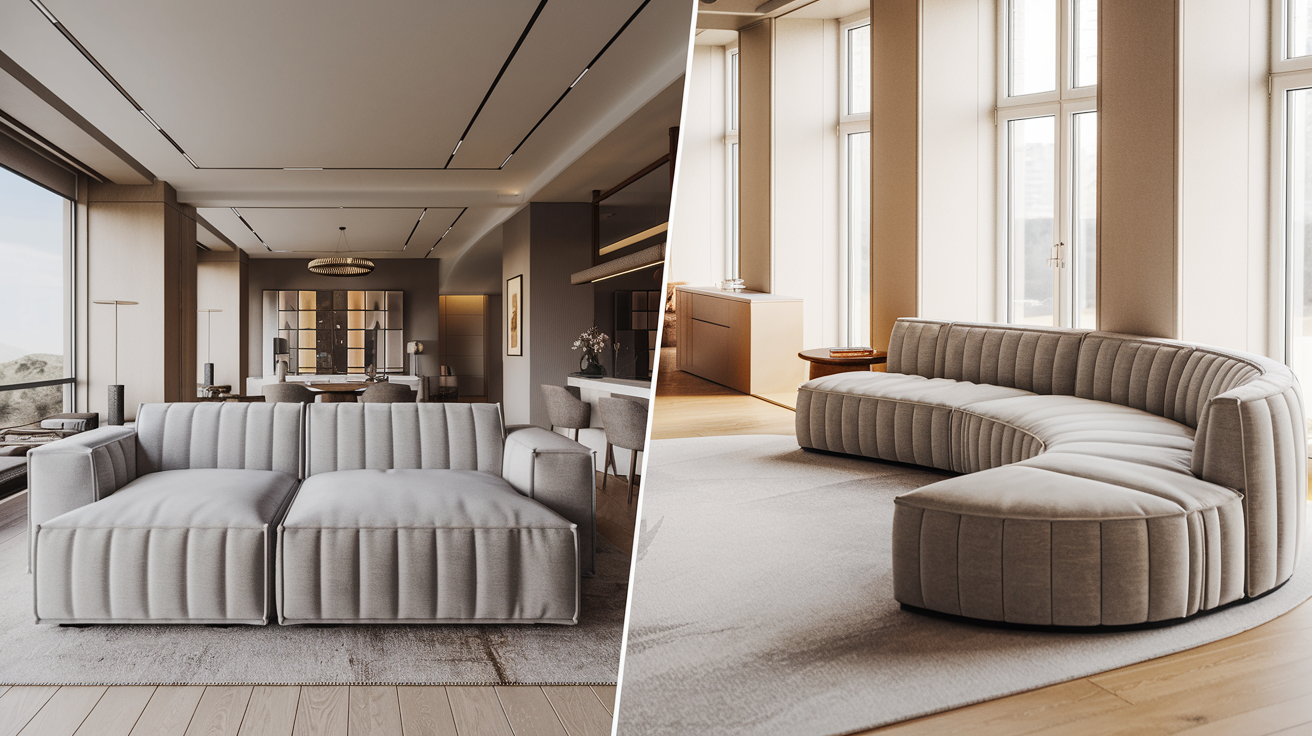
Table of Contents
When furnishing a living space where every square foot counts, the choice between a modular sofa and a sectional becomes crucial. Both options promise comfort while maximizing seating capacity, but which truly delivers better space efficiency? This isn't just about fitting furniture into a room—it's about creating a living area that feels spacious while meeting your lifestyle needs.
For urban dwellers, apartment residents, or anyone working with limited square footage, understanding the nuanced differences between modular sofas and sectionals can be the difference between a cramped living room and a comfortable, functional space. Both furniture options have evolved significantly, with manufacturers like Smart Living developing innovative designs specifically for contemporary space-conscious homes.
In this comprehensive guide, we'll analyze the space-saving potential of both modular sofas and sectionals, examining configuration flexibility, room adaptability, and practical considerations to help you determine which option will best optimize your living space while meeting your comfort and style requirements.
Understanding the Difference: Modular Sofas vs. Sectionals
Before we can determine which option saves more space, it's essential to understand what distinguishes modular sofas from sectionals, as these terms are often incorrectly used interchangeably.
What Defines a Modular Sofa?
A modular sofa consists of multiple independent pieces or modules that can be arranged and rearranged in various configurations. Each module—be it a corner piece, armless chair, ottoman, or chaise—functions as a standalone unit that connects with other pieces through mechanisms like hooks, clasps, or weighted designs that keep them in place.
The defining characteristic of truly modular sofas is their ability to be completely reconfigured. You can separate an L-shaped arrangement into individual seating pieces for a party, create a conversational U-shape when hosting, or form a traditional straight sofa when needed. This adaptability extends to changing room layouts or even moving to new homes, where the configuration can be altered to suit different spaces.
Many Smart Living modular options feature standardized dimensions for each unit, creating a system where pieces can be interchanged and repositioned without disrupting the overall aesthetic of the furniture.
What Defines a Sectional Sofa?
Sectional sofas are multi-piece seating arrangements typically formed in L or U shapes. Unlike modular sofas, traditional sectionals consist of two or more sections that fit together in a specific, predetermined configuration. The pieces are designed to create a unified seating area but offer limited flexibility in terms of rearrangement.
Most sectionals come in set configurations—commonly a two or three-seat section combined with a chaise lounge or corner piece. While the sections can be separated, they're designed to be arranged in just one or two specific ways, as the armrests, back heights, and overall design elements are created for a particular formation.
Modern sectionals have evolved to include some modular features, blurring the lines between the two categories, but traditional sectionals maintain their relatively fixed arrangement by design.
Space Efficiency Comparison
When evaluating space efficiency, we need to consider several factors beyond simple dimensions: how the furniture interfaces with room layout, functionality per square foot, and adaptability to changing needs.
Footprint Assessment
In terms of pure footprint, sectionals typically occupy less total floor space than an equivalent arrangement of modular pieces. This efficiency comes from their unified design—sectional pieces fit together with minimal gaps and overlapping arms, reducing wasted space between seating sections.
Modular sofas, by contrast, sometimes require slightly more total square footage when arranged in traditional formations. This is because each module needs to function as a standalone piece, requiring supporting structure on all sides—even sides that will be connected to other modules. This can create a marginally larger footprint for the same seating capacity.
However, the space efficiency calculation changes dramatically when we consider non-standard room shapes or layouts. A sectional with a fixed L or U configuration might waste space in a narrow or unusually shaped room, while modular pieces can be arranged to precisely fit available space.
Utilizing Challenging Spaces
For rooms with challenging architectural features—bay windows, angled walls, fireplace alcoves, or tight corners—modular sofas offer superior space utilization. Individual modules can be positioned to work with, rather than against, these features.
Sectionals perform best in rooms with clean, straight walls and regular dimensions where their predetermined shapes can be positioned optimally. In rooms with architectural obstacles, a sectional might leave unusable gaps or awkward spaces that compromise the room's functionality.
The Smart Home collection includes numerous space-conscious designs that demonstrate how strategic furniture selection can transform challenging room layouts into highly functional spaces.
The Flexibility Factor: Reconfiguration Potential
Perhaps the most significant difference between modular sofas and sectionals is their adaptability over time—a crucial consideration for space efficiency beyond initial placement.
Modular Adaptability
The primary space-saving advantage of modular sofas lies in their adaptability. Their reconfiguration potential allows for:
Daily transformations: A modular arrangement can serve as a traditional sofa during the day and reconfigure into a guest bed at night by repositioning ottomans and corner pieces.
Seasonal changes: During winter months when indoor entertaining is more common, modules can form conversational arrangements. In summer, they can be separated to create flow between indoor and outdoor spaces.
This flexibility means that modular sofas can serve multiple functions without requiring additional furniture pieces—an ottoman module can be extra seating, a coffee table, or a footrest, eliminating the need for separate furniture that would consume additional space.
Sectional Limitations
Sectionals offer limited reconfiguration options by design. While some newer models feature reversible chaise sections or movable ottomans, traditional sectionals commit to a particular room layout. This permanent footprint can become problematic if:
Your living patterns change (such as needing space for a home office or exercise area)
You relocate to a differently configured living space
You need temporary space for special occasions or projects
The fixed nature of sectionals means your room arrangement remains relatively constant, potentially limiting how you can utilize your space over time.
Optimizing Small Spaces: Room-Specific Considerations
Different living spaces present unique challenges when selecting space-efficient seating. Let's examine how modular sofas and sectionals perform in specific room scenarios.
Studio Apartments
In studio apartments where the living area often doubles as sleeping space, modular sofas typically outperform sectionals. Individual modules can be separated at night to create clearance for a pullout bed or can themselves be rearranged into sleeping configurations.
Sectionals in studio spaces can be problematic unless they're specifically designed with convertible features. Their fixed configuration may create dead spaces that can't be utilized effectively in a compact layout.
Open Concept Living Areas
In open floor plans, both furniture types can excel at space division—creating distinct functional zones without walls. Sectionals often perform well as room dividers between living and dining areas, establishing clear boundaries while maximizing seating.
Modular arrangements, however, offer the advantage of changing these boundaries as needed. During dinner parties, modules can be rearranged to expand the dining area, then reconfigured afterward to maximize lounging space.
The versatility of Smart Office furniture demonstrates how adaptable pieces can transform spaces from professional to casual environments without sacrificing comfort or style—a principle that applies equally to modular seating in living areas.
Narrow Living Rooms
Long, narrow living rooms present particular challenges. Sectionals can work well positioned along the longer wall with the shorter return against the narrow wall, defining a comfortable seating area without extending too far into limited floor space.
Modular pieces, meanwhile, can be arranged in non-traditional configurations that work with narrow dimensions—perhaps as two facing loveseats with corner pieces used elsewhere in the room, or as a broken L-shape that accommodates doorways or traffic patterns.
Practical Considerations Beyond Space
While this comparison focuses primarily on space efficiency, several related factors influence how these furniture options perform in real-world settings.
Movement and Placement
Modular sofas typically offer easier navigation through tight spaces during delivery and setup. Individual modules can be carried through narrow doorways, up staircases, and around tight corners that might be impossible for larger sectional pieces.
This delivery advantage extends to rearrangement—modular pieces can be moved by one person, while sectionals generally require multiple people to reposition safely.
Long-Term Space Efficiency
From a long-term perspective, modular sofas often represent better space efficiency across different homes and life stages. Their adaptability means they can transition from a first apartment to a larger home without becoming obsolete or awkwardly proportioned for new spaces.
Sectionals, while potentially more space-efficient in their optimal setting, may become problematic if that setting changes. A sectional perfectly fitted to one home might be completely wrong for the next, potentially wasting space or requiring replacement.
Smart Living's approach to appliances and furniture emphasizes this kind of adaptability and longevity—products designed to serve evolving needs rather than single-use scenarios.
Making Your Decision: A Practical Guide
To determine whether a modular sofa or sectional will save more space in your specific situation, consider the following decision framework:
Choose a Sectional If:
Your living room has a standard rectangular shape with adequate wall space for the configuration you prefer
You have a clear vision for your room's permanent layout and don't anticipate needing to reconfigure
You're looking for maximum seating capacity in a predictable arrangement
You prefer a unified aesthetic where pieces are designed specifically to work together
You value minimizing the small gaps that sometimes appear between modular pieces
Choose a Modular Sofa If:
Your space has unusual dimensions, angles, or architectural features
You anticipate changing your furniture arrangement seasonally or for different functions
Your living situation is likely to change (moving, family expansion, etc.)
You want the flexibility to scale your seating by adding or removing modules as needed
You value furniture that can adapt to multiple rooms or living scenarios
When measuring for either option, remember to account for traffic flow, door clearances, and functional space around the seating area. The most space-efficient solution is one that not only fits dimensionally but also supports how you actually live in and move through the space.
When determining whether a modular sofa or sectional saves more space, the answer depends largely on your specific living situation and how you define "space efficiency." In pure dimensional terms, well-designed sectionals might occupy slightly less floor space for equivalent seating. However, when considering functional space efficiency—how effectively furniture adapts to your needs and living patterns—modular sofas often provide superior value.
For homes where space is at a premium, the flexibility of modular furniture can transform a single room to serve multiple functions without requiring additional square footage. This adaptability represents a form of space efficiency that goes beyond simple measurements, allowing you to maximize the utility of limited space.
The best choice ultimately depends on balancing your current spatial constraints with anticipation of future needs. For stable living situations with straightforward room layouts, a well-chosen sectional can provide space-efficient comfort. For evolving lifestyles or challenging spaces, the reconfiguration potential of modular options often delivers better long-term space utilization.
Whichever option you select, prioritizing quality construction and thoughtful design ensures your space-saving solution will remain comfortable and functional for years to come—making the most of every square foot in your home.
Ready to find the perfect space-saving seating solution for your home? Explore Smart Living's collection of thoughtfully designed, premium quality furniture at transparent prices. Visit Smart Living today to discover how we're revolutionizing the way people shop for everyday essentials.