DIY Acoustic Panels for Home Offices: Professional Sound Quality Under $200
Nov 08,2025 | Smart-Living
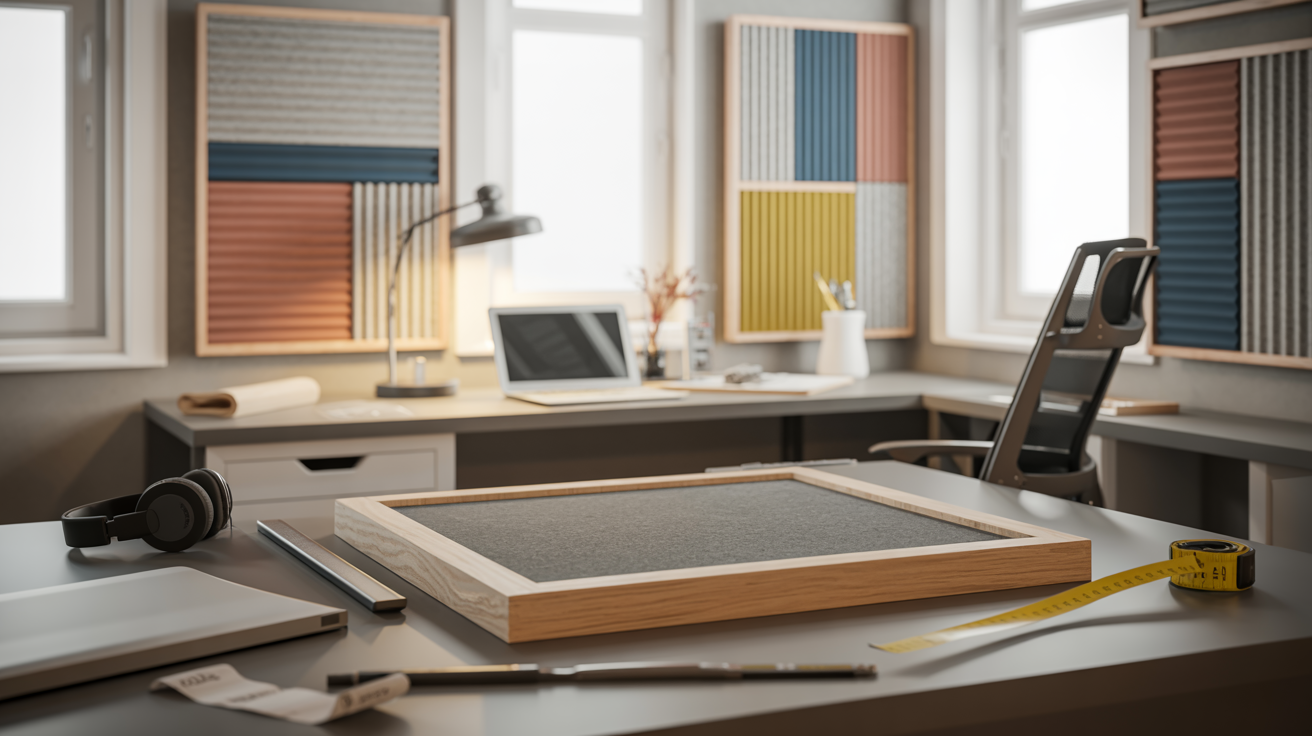
Table Of Contents
- Understanding Acoustics in Home Offices
- Benefits of DIY Acoustic Panels
- Materials and Tools You'll Need
- Step-by-Step Guide to Building Acoustic Panels
- Strategic Panel Placement in Your Home Office
- Aesthetic Integration with Home Office Furniture
- Testing the Effectiveness of Your Panels
- Advanced Options for Enhanced Performance
- Conclusion: Enjoying Your Acoustically Treated Space
Working from home has become the new normal for many professionals, but creating an optimal work environment goes beyond just finding a quiet corner. Poor room acoustics can significantly impact your productivity, especially during video calls and recordings. Echo, reverb, and background noise can make you sound unprofessional and strain communication with colleagues and clients.
Commercial acoustic solutions often come with premium price tags, but what if you could achieve professional-grade sound treatment for your home office without breaking the bank? Our comprehensive guide will walk you through creating effective acoustic panels for under $200 total, using readily available materials and basic tools.
Whether you're conducting important client calls, recording podcasts, or simply want to reduce the mental fatigue that comes with working in an echo-filled space, these DIY acoustic panels will transform your home office acoustics while complementing your existing décor. Let's dive into how you can create a more professional-sounding workspace while saving significantly compared to store-bought options.
DIY Acoustic Panels for Your Home Office
Professional Sound Quality for Under $200
Why DIY Acoustic Panels?
- Cost-Effective: Save 70-80% compared to commercial panels
- Customizable: Match your decor and space requirements
- Quality Control: Use higher quality materials than budget commercial options
- Space Optimization: Create panels that work with your existing furniture
Materials Needed (~$150-180)
4-Step Construction Process
Frame Construction
Build wooden frames using 1"x4" pine boards cut to your desired panel size.
Insulation Placement
Cut fiberglass insulation to fit snugly inside frames without compression.
Fabric Wrapping
Wrap and staple fabric around the frame, keeping it tight for a clean finish.
Mounting Hardware
Add hanging hardware to the back for easy wall mounting or create stands.
Strategic Panel Placement
First Reflection Points
Place panels where sound first bounces off walls before reaching your ears.
Behind Your Seating
Reduces echo from sound bouncing between parallel walls.
Room Corners
Corners cause bass buildup. Placing panels here reduces overall room reverberation.
Testing Your Acoustic Panels
Before & After Recording Test
Record your voice before and after installing panels. Compare audio quality focusing on echo reduction.
Clap Test
A simple clap in the center of the room. After treatment, it should sound cleaner with less echo.
Transform your home office acoustics with these DIY panels for professional sound quality on a budget.
Understanding Acoustics in Home Offices
Before diving into your DIY project, it's important to understand what you're trying to achieve. Home offices typically suffer from two acoustic problems: echo/reverberation and external noise penetration. Hard, flat surfaces like walls, ceilings, windows, and even your desk reflect sound waves, creating that hollow, unprofessional sound quality you might notice during calls.
Sound waves bounce around your room, causing reverberations that can make your voice sound distant or muddy to others. Additionally, external sounds from other rooms or outside can enter your space, creating distractions and interruptions. The good news is that both issues can be significantly improved with strategically placed acoustic panels.
Professional recording studios invest thousands in acoustic treatment, but the core principles can be applied in your home office at a fraction of the cost. The key is to focus on the most problematic areas first—typically the first reflection points where sound waves initially bounce off surfaces before reaching your ears or microphone.
Benefits of DIY Acoustic Panels
Creating your own acoustic panels offers several advantages beyond just saving money:
Cost Efficiency: Commercial acoustic panels typically cost $50-150 each, meaning a basic setup could easily exceed $500-1000. Our DIY approach brings that down to under $200 for 4-6 panels—enough for most home offices.
Customization: Build panels that perfectly fit your space and aesthetic needs. Choose fabrics that complement your décor rather than settling for the limited commercial options.
Quality Control: Many budget commercial panels use inferior materials to cut costs. By building your own, you can select high-quality insulation with better sound absorption properties.
Space Optimization: Custom panels can be sized to work around furniture like your bookshelf or dressing table that might be doubling as office furniture in multi-purpose rooms.
Educational Value: Understanding acoustic treatment principles helps you make better decisions about your workspace organization and setup.
Materials and Tools You'll Need
For a basic set of four 24" x 48" panels (sufficient for most home offices), you'll need:
Materials:
- 1" x 4" pine boards (approximately 48 linear feet) - $30-40
- Rigid fiberglass insulation panels (Owens Corning 703/705, Rockwool, or similar) - $50-60 for a pack that makes 4-6 panels
- Breathable fabric (cotton, polyester, or similar non-reflective material) - $30-40 depending on your aesthetic choices
- Staples - $5
- Wood screws (1 1/4" to 1 1/2") - $5
- Wood glue - $5
- Optional: Decorative trim - $10-20
- Optional: Corner braces - $5
Tools:
- Measuring tape
- Saw (hand saw works, but miter saw or circular saw is easier if available)
- Staple gun
- Screwdriver or drill with driver bit
- Square for ensuring right angles
- Scissors or fabric cutting tools
- Safety equipment (gloves, eye protection, dust mask)
The total cost should range from $150-180 depending on your material choices and what tools you already have. Remember that these are upfront costs—once you have the tools, future panels will be even more affordable.
Step-by-Step Guide to Building Acoustic Panels
Frame Construction
1. Measure and cut your 1"x4" pine boards to create frames for your panels. For a standard 24"x48" panel, cut two pieces at 48" long and two pieces at 22" long (the shorter pieces fit inside the longer ones, making the interior dimension 24"x48").
2. Lay out the frame pieces on a flat surface, forming a rectangle with the shorter pieces inside the ends of the longer pieces.
3. Apply wood glue to the joints where the pieces meet, then secure each corner with two wood screws for stability.
4. Check that your frame has right angles using a square. Adjust as needed before the glue sets.
5. Optional: Add corner braces for additional stability if your frames feel at all wobbly.
Pro tip: If you're placing your home office in a smaller room with a Murphy bed or sofa bed, consider building thinner panels (2" depth instead of 4") to preserve precious space while still improving acoustics.
Insulation Placement
1. Cut your insulation material to fit inside the frame. For optimal sound absorption, the insulation should fit snugly but not be compressed.
2. Wear protective gear (gloves, mask, eye protection) when handling fiberglass insulation as it can irritate skin and lungs.
3. Place the cut insulation into the frame. The insulation should sit flush with one side of the frame (this will be the front of your panel).
4. If using thicker insulation (2" or more), you may need to create a deeper frame or use multiple layers of thinner insulation for better results.
Fabric Wrapping
1. Cut your fabric to size, allowing for at least 4-6 inches of excess on all sides of your frame.
2. Lay the fabric face-down on a clean, flat surface.
3. Place your frame with the insulation facing down onto the center of the fabric.
4. Starting from the middle of one side, pull the fabric tight and staple it to the back of the frame. Then do the same on the opposite side, ensuring the fabric remains taut.
5. Continue this process, working from the center outward on each side, alternating between opposing sides to maintain even tension.
6. At the corners, fold the fabric neatly like you would when wrapping a gift, ensuring no insulation is visible and the front has a smooth, professional finish.
7. Trim any excess fabric once all edges are securely stapled.
Finishing Touches
1. Inspect your panel for any loose fabric or visible insulation and secure as needed.
2. Optional: Add decorative trim around the edges of the front face for a more polished look that matches your coffee table or other furniture.
3. Install hanging hardware on the back. You can use picture frame hangers, Z-clips, or even velcro strips depending on your wall type and preference.
4. For panels that will stand free (rather than hang), consider building simple feet or stands so they can be positioned strategically without wall mounting.
Strategic Panel Placement in Your Home Office
Where you place your acoustic panels is just as important as how you build them. For optimal results in a home office setting, focus on these key areas:
First Reflection Points: These are the points on walls where sound from your voice or speakers bounces off before reaching your ears. To find these points, have someone hold a mirror against the wall and move it around—anywhere you can see your mouth or speakers from your seated position is a first reflection point.
Behind Your Seating Position: Placing a panel on the wall behind you reduces echo from sound bouncing between parallel walls.
Above Your Desk: If ceiling reflections are an issue, consider mounting a panel horizontally above your workspace (if possible) or installing cloud panels that hang horizontally from the ceiling.
Corners: Room corners are notorious for causing bass buildup. While simple flat panels won't fully address bass issues, placing panels in or near corners can help reduce overall room reverberation.
If your home office shares space with a TV console area, consider how panel placement can benefit both functions. Panels near your TV can improve audio clarity for both entertainment and work purposes.
Aesthetic Integration with Home Office Furniture
Your acoustic panels don't need to look like utilitarian sound equipment. With thoughtful design choices, they can become attractive elements of your home office décor:
Fabric Selection: Choose fabrics that complement your existing color scheme or furniture. Consider using the same fabric as your office chair or coordinating with your bunk bed if your office shares space with a sleeping area.
Panel Arrangement: Create a visual pattern with multiple panels. Alternating colors or creating a gradient effect can transform functional items into an artistic focal point.
Dual-Purpose Design: Mount photos or artwork to the front of your panels, effectively hiding their acoustic function while maintaining their sound-absorbing properties. Just ensure any additions don't completely seal the breathable fabric.
Furniture Coordination: Position panels to complement your office layout. For instance, a panel above your foldable dining table that doubles as a work surface can both absorb sound and create visual balance.
If your home office includes a shoe cabinet or wardrobe, consider how panels can be positioned to work with these elements rather than competing with them visually.
Testing the Effectiveness of Your Panels
Once your panels are installed, you'll want to verify they're making a difference. Here are simple ways to test their effectiveness:
Before and After Recording: Record your voice in the room before installing panels and then again afterward. Compare the audio quality, paying attention to echo and reverberation.
Clap Test: A simple clap in the center of the room will help you hear the difference in reverberation time. Before treatment, you'll likely hear a distinct echo. After proper treatment, the clap should sound cleaner and more defined.
Video Call Feedback: Ask colleagues if they notice an improvement in your audio quality during video calls. Often, others can better detect improvements in sound quality.
Room Response Apps: There are smartphone apps available that can measure room acoustics more precisely if you want numerical confirmation of your improvements.
Remember that acoustic treatment is often an iterative process. You may need to adjust panel positions or add more panels to achieve your desired sound quality.
Advanced Options for Enhanced Performance
Once you've mastered basic panels, consider these advanced techniques for even better acoustic performance:
Air Gap Mounting: Instead of mounting panels flush against the wall, create a small gap (1-2 inches) between the panel and wall. This dramatically improves low-frequency absorption without additional cost.
Varied Thickness: Consider building some panels with different insulation thickness to target different frequency ranges.
Bass Traps: For corner placement, triangular bass traps can be more effective than flat panels. These can be built using similar materials but in a triangular configuration that fits into room corners.
Ceiling Clouds: Hanging panels horizontally from the ceiling can address reflections between floor and ceiling, which are often overlooked.
Diffusers: While absorption panels reduce echo, diffusers scatter sound waves to create a more natural acoustic environment. Simple wooden diffuser designs can complement your absorption panels for a more balanced sound.
If your home office is particularly challenging acoustically, consider strategic furniture placement as well. A well-placed coffee table with books or other items can help break up sound reflections from the floor.
Conclusion: Enjoying Your Acoustically Treated Space
Creating DIY acoustic panels for under $200 is not only cost-effective but also rewarding. The immediate improvement in sound quality will be noticeable in every video call, recording, or conversation you have in your home office. By taking control of your acoustic environment, you've eliminated a common problem that plagues many remote workers—poor sound quality that can undermine professional credibility.
Beyond the functional benefits, your custom-built panels contribute to a more personalized workspace that reflects your style while serving an essential purpose. The panels you've created offer performance comparable to commercial options costing several times more, demonstrating that quality doesn't always require premium pricing when you're willing to invest some time and effort.
As you continue to refine your home office setup, remember that acoustics are just one element of creating a productive work environment. Consider how your acoustic panels work together with proper lighting, ergonomic furniture, and thoughtful organization to create a space that supports your best work.
With your new acoustic treatment in place, you'll likely notice reduced fatigue during long workdays, as your brain no longer needs to work overtime processing echoes and reverberations. Enjoy your professional-sounding, custom-designed workspace—another step toward optimizing your home working environment without unnecessary expense.