How to Design a 4-Room Flat with Multi-Functional Furniture: A Smart Living Case Study
Jul 24,2025 | Smart-Living
- Introduction
- Case Study Overview: The Tan Family's 4-Room Flat
- Step 1: Assessing Space Limitations and Lifestyle Needs
- Step 2: Living Room Transformation with Multi-Functional Solutions
- Step 3: Bedroom Optimization Strategies
- Step 4: Dual-Purpose Dining and Kitchen Area
- Step 5: Creating a Flexible Study and Guest Room
- Budget Planning and Cost-Effective Approaches
- Implementation Challenges and Solutions
- Results and Long-Term Benefits
- Key Takeaways for Your Own Multi-Functional Design
- Conclusion
In Singapore's compact urban landscape, maximizing living space is an essential skill, especially in standard 4-room HDB flats where every square meter counts. The challenge of creating functional, comfortable living areas while avoiding clutter can seem daunting, but with the right approach to furniture selection and spatial planning, it's entirely achievable.
This case study explores how the Tan family transformed their 4-room flat from a cramped, compartmentalized space into an open, multi-functional home that adapts to their changing needs throughout the day. By strategically incorporating smart furniture solutions, they've created a living environment that feels spacious, organized, and stylish—without breaking the bank.
We'll walk through their step-by-step process, examining the specific challenges they faced in each room, the innovative furniture solutions they implemented, and the remarkable results they achieved. Whether you're moving into a new flat, renovating your current space, or simply looking to optimize your home with smarter furniture choices, this real-world example provides practical insights you can apply to your own living situation.
Case Study Overview: The Tan Family's 4-Room Flat
The Tans—a family of four consisting of parents with two school-age children—purchased their 4-room HDB flat in Tampines two years ago. At 90 square meters (approximately 970 square feet), their flat offered the typical layout: a living room, three bedrooms, a kitchen, and two bathrooms. While adequate in size for a family of four, they quickly found the conventional furniture arrangements created cramped spaces that didn't accommodate their dynamic lifestyle needs.
Their key challenges included:
- A living room that needed to function as an entertainment space, play area, and occasional work zone
- A master bedroom that felt cluttered with standard furniture
- Two smaller bedrooms—one for the children and one that needed to serve as both a study and guest room
- A dining area that was rarely used to its full capacity yet consumed significant space
- Limited storage throughout the flat, resulting in visible clutter
Their design goals focused on creating a home that could adapt to different activities throughout the day while maintaining a clean, uncluttered appearance. They sought a balance between functionality and aesthetic appeal, with furniture that could serve multiple purposes without compromising on quality or comfort.
Step 1: Assessing Space Limitations and Lifestyle Needs
Before selecting any furniture, the Tans conducted a thorough assessment of their space and daily routines. This critical first step formed the foundation of their successful space optimization strategy.
The family documented their typical weekday and weekend activities, noting when and how each room was used. They discovered that certain spaces sat empty for large portions of the day, while others became congested during peak usage times. This activity mapping revealed opportunities to implement multi-functional solutions.
They also measured each room precisely, creating a floor plan that accounted for windows, doors, built-in fixtures, and traffic flow patterns. This detailed spatial inventory helped them identify areas where convertible furniture could maximize functionality without impeding movement through the flat.
Additionally, the family took inventory of their possessions, categorizing items by frequency of use and identifying storage needs for each category. This process highlighted the need for furniture that could provide hidden storage while serving other primary functions.
The assessment concluded with a prioritized list of requirements for each room, creating a clear roadmap for their furniture selection process. This methodical approach ensured that every piece they subsequently chose would align with their specific needs rather than following generic design conventions.
Step 2: Living Room Transformation with Multi-Functional Solutions
The living room presented the greatest challenge and opportunity, as it needed to accommodate multiple activities while serving as the primary social space in the home. The Tans implemented several key multi-functional furniture pieces to transform this area:
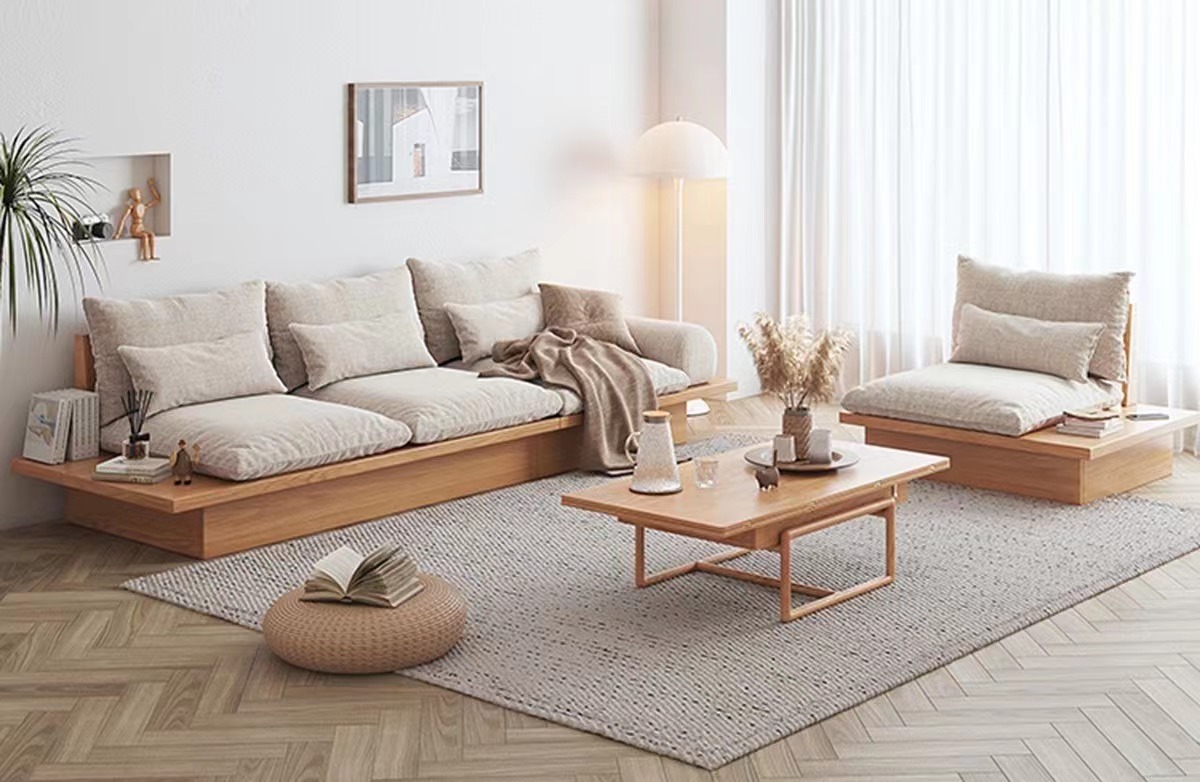
Modular Sofa System with Storage
Rather than selecting a traditional three-seat sofa, the family chose a modular system that could be reconfigured based on their needs. The configuration included:
A corner section that could be separated into individual seats when hosting larger gatherings
Built-in storage compartments beneath the seating for toys, books, and entertainment accessories
A chaise component that could be moved to different positions depending on the room's configuration
This flexible seating solution from Smart Living not only provided comfortable seating for the family and guests but eliminated the need for separate storage units for infrequently used items.
Transformable Coffee Table
The centerpiece of their living room was a remarkable coffee table that served multiple functions:
At its standard height, it functioned as a conventional coffee table
The top could be raised and extended to create a full-sized dining table when needed
The interior contained compartmentalized storage for dining accessories and children's homework supplies
When working from home or when children needed homework space, this transformable table eliminated the need for a dedicated dining area, freeing up significant floor space in the flat.
Wall System with Fold-Down Desk
Along one wall, the Tans installed a customized storage system that included:
A fold-down desk that could be tucked away when not in use
Shelving for books, decorative items, and the television
Cabinets for storing electronics, games, and media equipment
This wall system, sourced from Smart Home, provided essential storage while incorporating a workspace that disappeared when not needed, maintaining the living room's clean, spacious appearance.
Step 3: Bedroom Optimization Strategies
The master bedroom required careful planning to create a peaceful retreat while maximizing the limited space. The Tans focused on furniture that combined comfort with clever storage solutions:
Platform Bed with Integrated Storage
The conventional bed and bedside tables were replaced with a platform bed design featuring:
Hydraulic lift mechanism providing access to a large storage compartment beneath the mattress, eliminating the need for a separate linen closet
Built-in side tables with drawers for personal items
Integrated headboard with shelving for books and small decorative items
This all-in-one sleeping solution eliminated the need for a separate chest of drawers, creating a more open feeling in the bedroom while providing ample storage for clothing and bedding.
Wardrobe with Sliding Mirrored Doors
To maximize floor space, the Tans chose a wardrobe system with:
Full-height sliding doors with mirrors that eliminated the need for a separate dressing mirror
Customized interior compartments designed specifically for their clothing storage needs
A built-in fold-out ironing board that tucks away when not in use
The mirrored doors served the dual purpose of making the room appear larger while providing a practical function. The organization system inside significantly increased storage capacity compared to their previous furniture arrangement.
Step 4: Dual-Purpose Dining and Kitchen Area
Traditional dining setups often consume space disproportionate to their actual usage. The Tans reimagined their dining and kitchen area with multi-functional solutions:
Expandable Console Table
Instead of a permanent dining table, they installed a slim console table along one wall that:
Served as a decorative piece and drop zone for keys and mail when not in use for dining
Expanded to seat up to six people when needed for family meals
Included drawers for storing table linens, placemats, and serving utensils
This versatile piece from Smart Living occupied minimal space in its compact form but provided full functionality when required.
Kitchen Island with Adjustable Features
The kitchen island was designed with multiple functions in mind:
Nested seating that tucked completely under the counter when not in use
An extendable surface that could provide additional workspace or casual dining
Built-in power outlets for using small appliances at the island
Storage compartments for kitchen tools and pantry items
This intelligent use of kitchen space created a flexible zone that adapted to everything from quick breakfasts to food preparation to homework sessions, making the kitchen a true multi-purpose area.
Step 5: Creating a Flexible Study and Guest Room
The third bedroom needed to function primarily as a home office while occasionally accommodating overnight guests. The Tans implemented several innovative solutions:
Wall Bed with Integrated Desk System
The centerpiece of this room was a wall bed (also known as a Murphy bed) system that featured:
A comfortable full-sized bed that folded vertically into a cabinet when not in use
A desk surface that remained level (with items in place) when the bed was lowered, thanks to a clever pivoting mechanism
Shelving and cabinets surrounding the unit for books, office supplies, and guest items
This smart solution from Smart Office allowed the room to transition seamlessly between work and guest accommodations without compromising on either function. During regular use as a study, there was no indication that a full bed was concealed within the cabinetry.
Convertible Seating
To provide additional seating without consuming floor space, they added:
A compact armchair that converted into a single bed for situations requiring additional sleeping capacity
Ottoman storage cubes that served as extra seating, footrests, or side tables
These flexible seating options ensured the room could adapt to different needs while maintaining its primary function as a productive workspace.
Budget Planning and Cost-Effective Approaches
The Tan family approached their furniture investment strategically, focusing on value rather than simply seeking the lowest prices. They recognized that quality multi-functional furniture often requires a higher upfront investment but delivers greater value over time.
Their budgeting approach included:
Investment prioritization: They allocated larger portions of their budget to pieces that would see daily use and provide multiple functions, such as the living room coffee table and the wall bed system.
Total cost comparison: For each multi-functional piece, they calculated the combined cost of the separate furniture items it would replace, confirming that the integrated solution offered better value despite the higher initial price.
Quality considerations: They focused on durability, particularly for mechanisms like folding components, hydraulic lifts, and extendable elements that would undergo frequent use.
Phased implementation: Rather than transforming all rooms simultaneously, they prioritized spaces based on immediate needs and spread purchases over six months to manage cash flow.
By purchasing directly from manufacturers like Smart Living that eliminate retail markups, the Tans were able to access higher quality multi-functional pieces at more reasonable price points. The transparent pricing model helped them make informed decisions about where to invest for maximum impact.
Implementation Challenges and Solutions
The journey to a multi-functional home wasn't without obstacles. The Tans encountered several challenges during implementation:
Delivery and Assembly Complications
Challenge: Some larger pieces couldn't be transported through the flat's doorways and corridors in their assembled state.
Solution: They selected modular furniture systems designed for tight spaces, with components that could be assembled within the room. Smart Living's delivery service included an assessment of access paths before finalizing orders, preventing potential issues.
Adjustment Period for Mechanisms
Challenge: Family members initially found some of the transformation mechanisms cumbersome or confusing to operate.
Solution: They created simple instruction cards for each piece and practiced transformations together until the movements became intuitive. Within two weeks, even the children could easily convert the furniture as needed.
Weight and Structural Considerations
Challenge: Some multi-functional pieces were considerably heavier than standard furniture, raising concerns about floor loading.
Solution: They consulted with a structural engineer who confirmed weight distribution strategies, including the placement of heavier items along walls and load-bearing points within the flat's structure.
Unified Aesthetic
Challenge: Finding multi-functional pieces that worked together aesthetically proved difficult when sourcing from different manufacturers.
Solution: They established a consistent color palette and material theme, focusing on natural wood tones and neutral upholstery that could be accented with changeable decorative elements. Purchasing coordinated pieces from Smart Living's collections ensured design coherence.
Results and Long-Term Benefits
After fully implementing their multi-functional furniture strategy, the Tan family experienced significant improvements in their daily living experience:
Increased Usable Space
The most immediate benefit was an approximate 40% increase in usable floor space when furniture was in its compact configuration. This created a more open, breathable environment that reduced the psychological feeling of crowding in the flat.
Enhanced Functionality
The flat now comfortably accommodates a wider range of activities. The family can host dinner parties for up to eight people, provide comfortable overnight accommodation for two guests, and create dedicated work and study spaces when needed—all without permanent dedication of space to these occasional functions.
Reduced Clutter
The integrated storage solutions eliminated visible clutter, contributing to a more organized and peaceful environment. Items now have designated storage locations within the multi-functional furniture, making maintenance of tidy spaces significantly easier.
Adaptability to Changing Needs
As their children grow and family activities evolve, the Tans can reconfigure their spaces without purchasing new furniture. The adaptable nature of their selections provides long-term flexibility that standard furniture cannot match.
Energy Efficiency
An unexpected benefit came from improved airflow and natural light distribution throughout the flat. With less bulky furniture blocking windows and vents, they noticed enhanced natural ventilation and better light penetration, reducing their reliance on artificial lighting and cooling from home appliances.
Key Takeaways for Your Own Multi-Functional Design
Based on the Tan family's experience, here are essential guidelines to consider when implementing multi-functional furniture in your own 4-room flat:
Start with a Comprehensive Needs Assessment
Before purchasing any furniture, document your daily activities and identify when and how each space is used. Create a detailed floor plan with precise measurements, and catalog storage requirements based on your actual possessions.
Prioritize Quality of Mechanisms
For furniture with moving parts like wall beds, extendable tables, or folding desks, the quality of the mechanisms is paramount. Invest in pieces with smooth, durable hardware that will withstand regular use without failing.
Consider the Transformation Effort
The easier it is to convert furniture between its various functions, the more likely you are to actually use those features. Test pieces before purchasing when possible, and consider who in your household will need to operate the mechanisms.
Plan for Traffic Flow
When furniture is in different configurations, ensure that movement pathways through your home remain clear. Multi-functional pieces should not create awkward traffic patterns or block access to essential areas when deployed.
Integrate Technology Thoughtfully
Consider how technology fits into your multi-functional spaces. Plan for cable management, charging stations, and device storage within your furniture solutions to prevent technology clutter.
Create Visual Continuity
Select pieces with complementary design elements to create a cohesive look throughout your home. Use consistent materials, hardware finishes, and color palettes to unify diverse functional pieces.
Balance Open and Closed Storage
While maximizing storage is important, include both open display areas and closed storage in your plan. This creates visual interest while providing concealment for less attractive necessities.
Conclusion
The Tan family's transformation of their 4-room HDB flat demonstrates the remarkable potential of multi-functional furniture to revolutionize compact living spaces. Through careful planning, strategic investments, and thoughtful implementation, they created a home that adapts to their needs throughout the day while maintaining a spacious, uncluttered aesthetic.
Their experience highlights several key principles: the importance of understanding your specific spatial needs, the value of quality over initial cost, the benefits of integrated storage solutions, and the freedom that comes from furniture that can transform as activities change.
While multi-functional furniture requires more initial planning and often represents a higher upfront investment, the long-term benefits—both practical and psychological—make it an ideal approach for maximizing life in Singapore's typical 4-room flats. The flexibility, efficiency, and organization these solutions provide translate directly into a more comfortable, functional living environment.
By applying the lessons from this case study to your own home, you can create spaces that work harder for you, adapting to your lifestyle rather than forcing you to adapt to fixed furniture arrangements. The result is a home that feels more spacious, remains more organized, and better supports the full range of activities that make up daily life.
Ready to Transform Your Home with Smart Multi-Functional Solutions?
Explore Smart Living's collection of premium quality, transparently-priced furniture designed to maximize your living space while enhancing your lifestyle.
Shop Smart Living SolutionsCommentaire