Mesh vs Leather Office Chairs: A Complete Guide to Breathability & Durability
Nov 05,2025 | Smart-Living
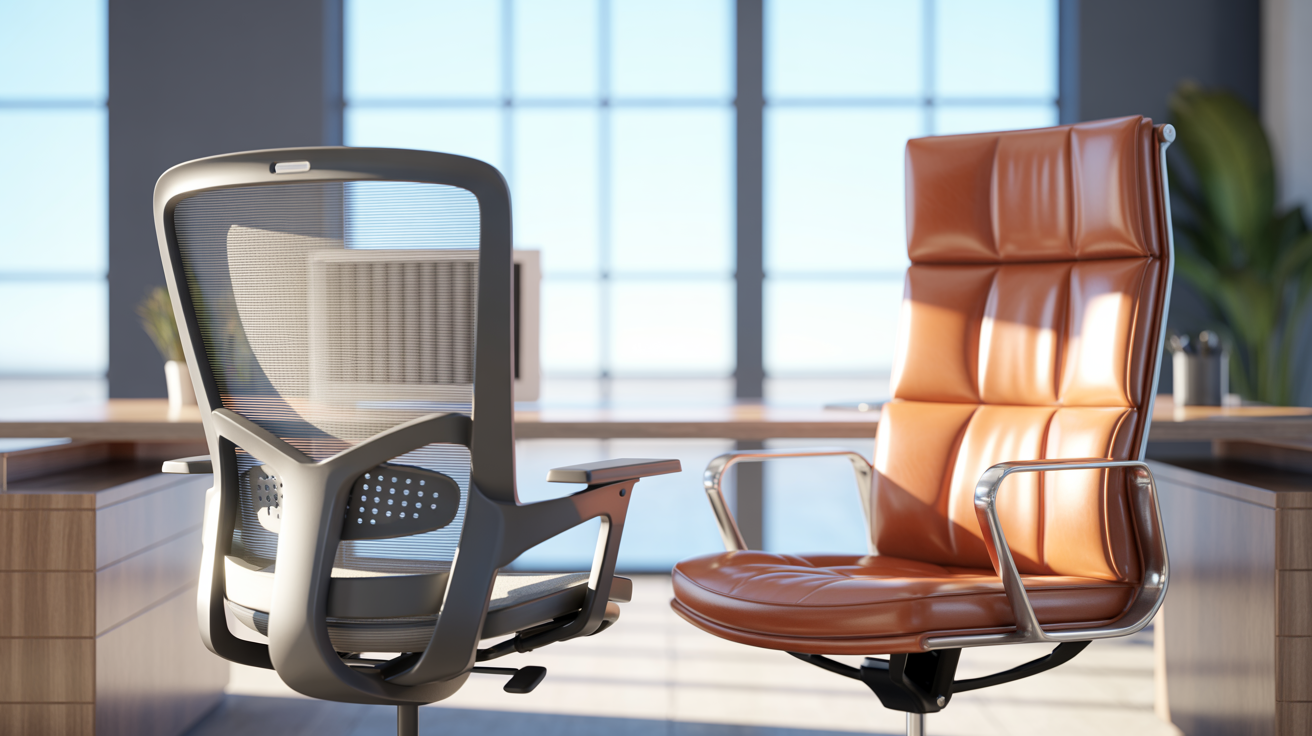
Table Of Contents
- Introduction: The Importance of Choosing the Right Office Chair
- Mesh Office Chairs: Benefits and Limitations
- Leather Office Chairs: Benefits and Limitations
- Breathability Comparison: Mesh vs. Leather
- Durability Face-Off: Which Material Lasts Longer?
- Comfort Factors Beyond Materials
- Maintenance Requirements and Cleaning Considerations
- Cost Analysis: Initial Investment vs. Long-Term Value
- Making Your Decision: How to Choose Between Mesh and Leather
- Conclusion: Finding Your Perfect Balance
When it comes to creating a productive workspace, few decisions impact your daily comfort as much as your choice of office chair. Whether you're setting up a home office or upgrading your workplace seating, the mesh versus leather debate represents a critical crossroads for many buyers. Both materials offer distinct advantages and potential drawbacks that directly affect two crucial factors: breathability and durability.
With many of us spending 40+ hours weekly in our office chairs, these seemingly small differences in material can significantly impact comfort, productivity, and ultimately, your investment's longevity. A chair that feels uncomfortable after a few hours or shows premature wear within months rather than years represents not just physical discomfort but also wasted resources.
At Smart Living, we understand that quality furnishings shouldn't require premium pricing, which is why we've created this comprehensive guide to help you navigate the mesh vs. leather decision with confidence. By examining each material's properties, maintenance requirements, comfort factors, and long-term value, you'll be equipped to make an informed choice that perfectly balances your needs for breathability, durability, aesthetics, and budget.
Mesh Office Chairs: Benefits and Limitations
Mesh office chairs have revolutionized workplace seating with their contemporary design and ventilation-focused construction. The defining feature of these chairs is the breathable mesh material stretched across a frame, most commonly found on the backrest but sometimes extending to the seat as well.
The primary advantage of mesh chairs lies in their exceptional airflow capabilities. The open-weave structure allows continuous air circulation against your body, effectively dissipating body heat and moisture. This design makes mesh chairs particularly valuable in warmer environments or for individuals who tend to feel hot while working. Many users report feeling significantly cooler throughout the day compared to traditional padded chairs.
Beyond temperature regulation, quality mesh chairs offer excellent support through their resilient tension. High-end mesh formulations provide enough give to conform to your body's contours while maintaining sufficient resistance to support proper posture. This balance helps prevent the sinking feeling sometimes experienced with heavily padded chairs while still providing comfort during extended use.
However, mesh chairs do come with certain limitations. The support experience can vary dramatically based on the quality of the mesh and frame design. Lower-quality mesh may stretch over time, reducing support and potentially creating pressure points. Additionally, the firmer feel of mesh seating isn't universally preferred – some users find it less comfortable for very long sitting sessions compared to more cushioned alternatives.
Weight capacity can also be a consideration with mesh designs. While premium mesh chairs feature reinforced construction capable of supporting substantial weight, the inherent properties of suspended mesh mean they typically have lower maximum weight capacities than their fully upholstered counterparts.
Leather Office Chairs: Benefits and Limitations
Leather office chairs represent the traditional choice for executive seating, projecting an air of sophistication and professional status. These chairs typically feature genuine leather, bonded leather, or high-quality faux leather (PU leather) stretched over cushioned frames for a classic, substantial seating experience.
The immediate appeal of leather chairs often comes from their luxurious look and feel. Genuine leather develops a distinctive patina over time, actually improving in appearance with proper care. This material offers a unique combination of softness and structure, conforming to your body while maintaining defined support. Many users appreciate the slightly yielding yet supportive sensation that quality leather upholstery provides.
Structurally, leather chairs typically feature more substantial cushioning throughout the seat and backrest. This additional padding creates a different comfort profile than mesh, with more initial plushness but potentially less defined ergonomic support. Higher-end leather chairs balance this by incorporating ergonomic design principles within their cushioned construction.
The limitations of leather primarily relate to heat retention and maintenance requirements. Leather naturally absorbs and retains body heat, making these chairs less ideal for hot environments or users who tend to feel warm while working. The material can feel uncomfortably warm during extended summer use, particularly in offices without strong climate control.
Additionally, leather requires more attentive maintenance than mesh to preserve its appearance and prevent cracking or peeling. Genuine leather needs occasional conditioning, while bonded and faux leathers may show wear at stress points more quickly. However, with proper care, a quality leather chair can maintain its appearance for many years, often aging more gracefully than other upholstery options.
Breathability Comparison: Mesh vs. Leather
Breathability represents one of the most significant differences between mesh and leather office chairs, directly affecting your comfort during extended use. This factor becomes particularly important in spaces without perfect climate control or for individuals who naturally run warm.
Mesh chairs excel in breathability by design. The open-weave construction creates constant airflow against your body, allowing heat and moisture to dissipate continuously. This ventilation effect means your back and legs stay cooler and drier even after hours of sitting. During warmer months or in heated office environments, this breathability can make a substantial difference in overall comfort.
The breathability advantage extends beyond mere temperature control. By reducing moisture accumulation, mesh chairs can help prevent the clammy feeling sometimes experienced with solid-surface seating. This moisture management also contributes to better hygiene over time, with less opportunity for odor development in the chair materials.
In contrast, leather chairs present an inherent breathability challenge. The material itself creates a barrier that traps heat and prevents moisture evaporation. In practical terms, this means leather chairs tend to feel warmer during use, with temperature increasing the longer you sit. During summer months or in warmer climates, this heat retention can become particularly noticeable.
Some premium leather chairs attempt to address this limitation through perforated leather designs or strategic ventilation channels, but these modifications only partially mitigate the fundamental breathability limitations. For year-round comfort in variable temperatures, mesh chairs maintain a clear advantage in the breathability category.
Durability Face-Off: Which Material Lasts Longer?
Durability represents a significant consideration when investing in office furniture, particularly for pieces used daily. Both mesh and leather offer distinct durability profiles with different vulnerability points and aging characteristics.
High-quality mesh chairs demonstrate excellent resilience to certain types of wear. The synthetic fibers used in premium mesh formulations resist fading, staining, and tearing when properly engineered. Quality mesh maintains its tension and supportive properties for many years without significant degradation. The breathable nature of mesh also means it's less susceptible to moisture damage compared to some other materials.
However, mesh durability varies dramatically based on quality. Lower-grade mesh may stretch permanently over time, losing its supportive tension. The edges where mesh connects to frames can become stress points, potentially developing tears or detachment with heavy use. When evaluating mesh chairs, close attention to the material density, fiber type, and connection methods provides insight into potential longevity.
Leather chairs present a different durability equation. Genuine full-grain leather ranks among the most durable upholstery materials available, capable of lasting decades with proper care. Unlike mesh that maintains consistent properties throughout its life, quality leather actually improves with age, developing a characteristic patina that many users find appealing.
The durability challenges for leather chairs typically relate to specific types of damage rather than overall longevity. Leather can be vulnerable to scratches, particularly in households with pets. Without proper conditioning, it may gradually dry out and develop cracks, especially when exposed to direct sunlight or dry environments. Bonded and faux leathers typically show more pronounced wear patterns at stress points, with potential peeling after several years of use.
For overall lifespan potential, properly maintained genuine leather holds an advantage, with some executive leather chairs remaining serviceable for 10-15 years or more. However, high-quality mesh chairs from reputable manufacturers typically offer 7-10 years of reliable service while requiring less maintenance – an important consideration for busy professionals.
Comfort Factors Beyond Materials
While the mesh versus leather debate forms a critical aspect of chair comfort, several additional factors significantly influence your overall seating experience regardless of upholstery choice. Understanding these elements helps ensure your selection addresses all comfort dimensions rather than focusing solely on materials.
Ergonomic Design Principles
Regardless of material, proper ergonomic design fundamentally determines chair comfort during extended use. Look for adjustable lumbar support that maintains your spine's natural curve, reducing lower back strain. Both mesh and leather chairs can incorporate excellent lumbar systems, though the implementation differs based on material properties.
Adjustable armrests represent another crucial comfort factor independent of upholstery. The ability to position armrests at your exact desk height prevents shoulder strain and improper typing posture. High-quality chairs in both categories offer 3D or 4D armrest adjustment (height, width, depth, and angle), supporting proper arm positioning regardless of your body dimensions.
The chair's recline mechanism significantly impacts comfort during different work activities. Advanced synchronous tilt mechanisms that maintain proper body angles throughout the recline range benefit users regardless of whether they choose mesh or leather upholstery. This feature proves particularly valuable when alternating between typing and reading activities throughout the day.
Cushioning Considerations
Seat cushioning represents an area where leather and mesh chairs often differ substantially. Leather chairs typically feature thicker padding throughout, creating a more traditional sitting experience. The cushioning density and quality dramatically affect comfort longevity – high-density foam maintains its supportive properties longer while preventing the development of pressure points.
Conversely, mesh seats often utilize thinner cushioning systems or suspended mesh designs that create comfort through tension rather than padding. This approach typically feels firmer initially but may provide more consistent support over time as foam cushions can gradually compress with use.
For the most versatile comfort, consider how different chair designs accommodate your particular body type and sitting preferences. Some users find suspended mesh seats insufficient for all-day comfort, while others experience pressure points with traditional padded designs. When possible, extended testing of different configurations helps identify your ideal cushioning approach.
Beyond the natural benefits of a well-designed bunk bed or the convenient functionality of a Murphy bed for space-saving, your office chair represents perhaps the most important furniture investment for daily comfort and productivity. The best chair designs thoughtfully integrate ergonomic principles with quality materials to create a balanced seating experience.
Maintenance Requirements and Cleaning Considerations
The practical aspects of chair maintenance often influence long-term satisfaction as much as initial comfort or aesthetics. Mesh and leather present distinctly different maintenance profiles that should align with your lifestyle and willingness to perform regular care.
Mesh chairs generally require minimal ongoing maintenance. The open structure naturally prevents dust accumulation compared to upholstered surfaces, and most mesh formulations resist staining from occasional spills. Regular cleaning typically involves just vacuuming with a brush attachment to remove surface dust, followed by wiping with a damp cloth for more thorough cleaning. Most mesh materials dry quickly due to their ventilated design, preventing moisture-related issues.
The maintenance advantages of mesh become particularly apparent in high-use environments or homes with children and pets. Spills generally don't penetrate mesh structures, making cleanup simpler. The material also resists odor retention compared to more absorptive upholstery options. These properties make mesh chairs particularly practical for busy professionals seeking low-maintenance furnishings.
In contrast, leather chairs require more attentive care to maintain their appearance and prevent premature aging. Genuine leather benefits from regular conditioning (typically quarterly) to prevent drying and cracking. This process involves applying appropriate leather conditioners that maintain the material's natural oils and flexibility. Without this maintenance, leather may gradually stiffen and develop surface cracks, particularly along seams and stress points.
Cleaning leather presents additional considerations. While the smooth surface allows easy wiping of dust, spills require prompt attention to prevent staining or material damage. Leather-specific cleaners help maintain the material's pH balance and finish, but improper cleaning products can actually accelerate damage. Exposure to direct sunlight also affects leather more dramatically than mesh, potentially causing fading or drying over time.
For households with active children, pets with claws, or environments where food and beverages are regularly present, the maintenance requirements become an important practical consideration. Mesh generally offers more forgiveness for occasional maintenance lapses, while leather's beauty depends more directly on consistent care.
Cost Analysis: Initial Investment vs. Long-Term Value
Office chair pricing spans a remarkable range, from budget options under $200 to premium executive models exceeding $1,500. Understanding how mesh and leather options compare across different price points helps establish realistic expectations for your investment.
At entry-level price points ($200-400), mesh chairs typically offer better value and performance. In this range, genuine leather is rarely used, with most "leather" chairs featuring synthetic alternatives that may degrade relatively quickly. Mesh chairs in this category often provide better breathability and ergonomic support than their similarly-priced leather counterparts, making them the more practical choice for budget-conscious shoppers.
The mid-range market ($400-800) presents more balanced options in both categories. Quality mesh chairs at this price point incorporate advanced ergonomic features, premium mesh formulations, and durable frameworks. Leather options typically use higher-grade bonded leather or limited genuine leather applications, with improved cushioning systems and adjustment mechanisms. Your preference for aesthetics and feel might reasonably guide decisions in this price range, as functional durability becomes more comparable.
Premium offerings ($800+) showcase the best characteristics of both materials. High-end mesh chairs feature exceptionally durable mesh with sophisticated tension systems, advanced ergonomic adjustments, and premium components throughout. Executive leather chairs in this category utilize top-grain or full-grain leather, high-density cushioning, and precision-engineered support systems. At this level, material choice becomes primarily preference-driven rather than value-based, as both options deliver excellent longevity when properly maintained.
From a long-term value perspective, consider that a quality office chair typically remains serviceable for 7-12 years of daily use. Amortizing even premium pricing across this timespan often reveals a surprisingly reasonable daily cost for an item used more consistently than almost any other furniture piece. Much like investing in a quality TV console or coffee table enhances your living space, a properly selected office chair represents an investment in daily comfort that delivers returns through improved productivity and reduced physical strain.
Making Your Decision: How to Choose Between Mesh and Leather
With a comprehensive understanding of how mesh and leather chairs compare across key factors, the final decision comes down to prioritizing what matters most for your specific situation. Consider these practical decision frameworks to guide your selection process.
Environmental Considerations
Your work environment plays a crucial role in determining the most appropriate chair material. If your space experiences temperature fluctuations, lacks strong climate control, or tends to run warm, mesh chairs provide significant advantages through superior ventilation. Their breathability makes them particularly valuable in naturally warm climates or upper-floor offices that receive substantial sunlight.
Conversely, leather chairs may prove more comfortable in consistently air-conditioned environments or cooler climates where heat retention becomes an asset rather than a limitation. The material's natural warmth can enhance comfort during winter months, particularly in spaces with aggressive air conditioning or drafts.
Consider also the aesthetic environment. Traditional office settings with wood furnishings like a bookshelf or classic wardrobe often complement leather chairs' executive appearance. More contemporary workspaces featuring modern design elements like a sleek foldable dining table or minimalist shoe cabinet may better suit mesh chairs' contemporary aesthetic.
Usage Patterns
Your typical workday structure influences which material will provide optimal comfort. If you regularly spend 8+ hours in continuous sitting sessions, mesh chairs often provide better long-term comfort through superior ventilation and consistent support. The breathable design prevents the uncomfortable heat buildup that can occur during marathon work sessions in leather chairs.
For those with more varied work patterns that involve regular movement and shorter sitting sessions, leather chairs may prove equally comfortable while offering their distinctive aesthetic advantages. The material's initial plushness feels welcoming during shorter use periods before heat retention becomes noticeable.
Consider also how you move throughout the day. If you frequently rotate, reach, or shift positions, mesh chairs typically accommodate movement with less friction against clothing. Leather surfaces can create more resistance against clothing during repositioning, particularly in warmer conditions when skin moisture increases friction.
Maintenance Willingness
Be realistic about your maintenance habits when selecting materials. If you prefer minimal upkeep requirements, mesh chairs offer clear advantages through their simple cleaning needs and resistance to damage from occasional maintenance neglect. Their forgiving nature suits busy professionals who prioritize convenience.
If you enjoy caring for quality items and regularly maintain other premium possessions, leather chairs reward this attentiveness with developing character and potential longevity. The material's gradual patina development creates a personalized appearance that many users find appealing, making the maintenance requirements feel more rewarding than burdensome.
For shared spaces or office environments where maintenance responsibilities may be unclear, mesh typically represents the safer choice for sustained appearance and performance over time.
Conclusion: Finding Your Perfect Balance
The choice between mesh and leather office chairs ultimately represents a personal balance of priorities across breathability, durability, aesthetics, maintenance, and value. Both materials offer distinct advantages when thoughtfully implemented in quality chair designs.
For most users seeking optimal comfort during extended use, particularly in variable temperature environments, high-quality mesh chairs deliver the most consistently comfortable experience through superior ventilation and ergonomic support. Their minimal maintenance requirements and resilience to daily wear make them practical choices for primary workstations.
Leather chairs remain unmatched in creating executive presence and traditional sophistication, with potential longevity advantages when properly maintained. For those who prioritize aesthetic warmth, appreciate traditional design elements, and don't find heat retention problematic, quality leather chairs deliver enduring satisfaction.
At Smart Living, we believe that exceptional quality shouldn't require paying excessive premiums. Whether you select mesh for its breathable performance or leather for its timeless appeal, our direct-to-consumer model ensures you receive premium materials and construction without the traditional retail markups. By working directly with original design manufacturers, we deliver office chairs that balance comfort, durability and value – allowing you to create a workspace that enhances both productivity and wellbeing without compromise.
Just as we carefully design our sofa beds and dressing tables to maximize both function and style, our seating solutions reflect our commitment to thoughtful design that enhances daily living. The perfect office chair isn't merely furniture – it's an investment in your comfort, productivity, and physical wellbeing that pays dividends every day.
The mesh versus leather decision represents more than just a material choice – it reflects your priorities for comfort, aesthetics, and practicality in a piece of furniture you'll use daily. By weighing the distinct advantages each material offers against your specific needs, you can select a chair that truly enhances your work experience.
Mesh chairs excel through superior breathability, consistent support, and minimal maintenance requirements – making them particularly valuable for extended use in variable environments. Leather chairs distinguish themselves through luxurious aesthetics, potential longevity with proper care, and a traditional executive presence that many professional settings prefer.
Whichever material aligns better with your priorities, remember that quality construction matters as much as material selection. A well-engineered chair with thoughtful ergonomic features provides better long-term value than compromised designs regardless of upholstery choice.
At Smart Living, we're committed to delivering premium quality office furniture without the traditional retail markup. By connecting you directly with original design manufacturers, we ensure you receive exceptional value without sacrificing the quality and comfort you deserve in your workspace.
Ready to find your perfect office chair?
Explore Smart Living's curated collection of premium office furniture designed to deliver exceptional quality at transparent prices. Our direct-to-consumer approach means you'll enjoy superior materials and craftsmanship without paying traditional retail markups.
发表评论