Built-In vs Freestanding Wardrobes: The Ultimate Space & ROI Calculator Guide
Oct 02,2025 | Smart-Living
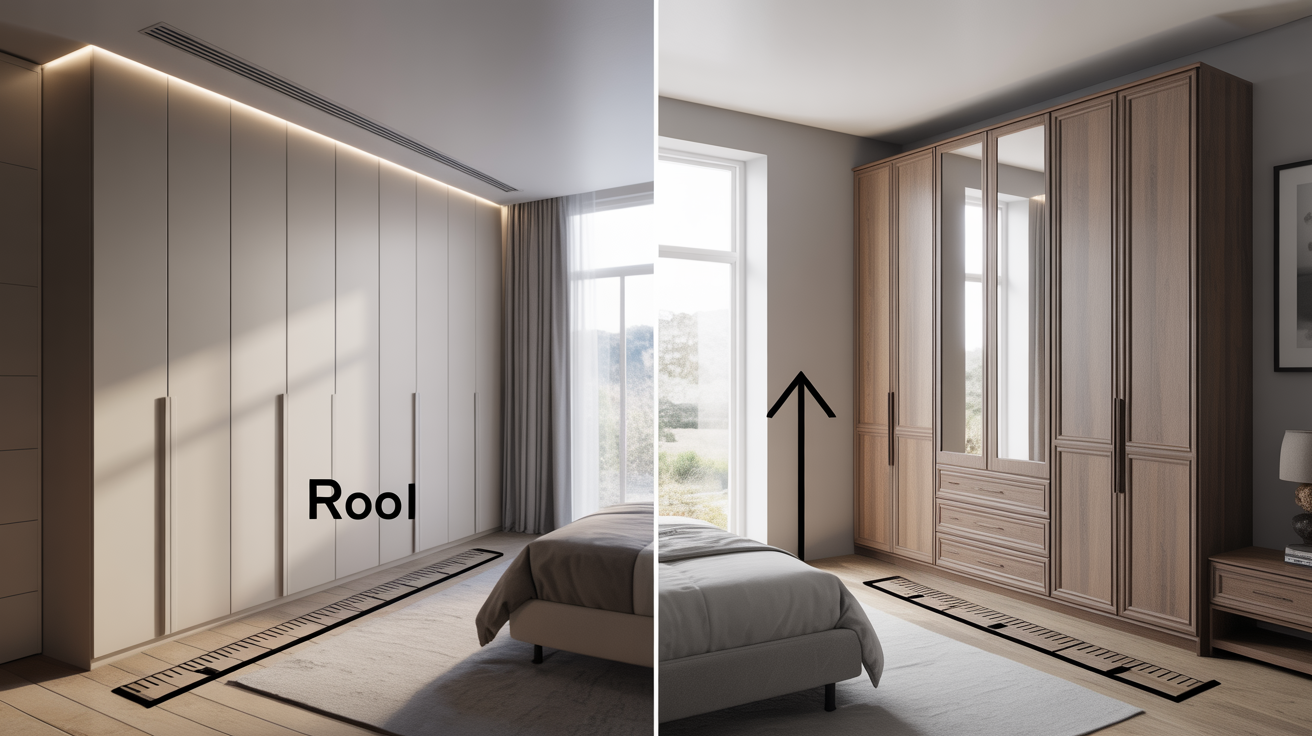
Table Of Contents
Choosing between built-in and freestanding wardrobes is more than just a matter of aesthetic preference—it's a decision that impacts your living space efficiency and financial investment for years to come. Whether you're renovating, moving into a new home, or simply upgrading your storage solutions, understanding the true cost-benefit analysis of each option can save you from costly mistakes and space-planning regrets.
At Smart Living, we believe that informed decisions lead to smarter living spaces. That's why we've developed this comprehensive guide that goes beyond surface-level comparisons to help you calculate the actual return on investment and space utilization of both wardrobe types. Unlike typical furniture purchases, wardrobes represent a significant investment that affects both your daily convenience and your property's value.
In this article, we'll break down the key differences between built-in and freestanding wardrobes, analyze space efficiency metrics, calculate long-term investment returns, and provide you with a practical calculator to determine which option makes the most sense for your specific situation. Let's transform your wardrobe decision from a guessing game into a strategic choice backed by data and expertise.
Defining the Two Wardrobe Types
Before diving into calculations and comparisons, let's establish clear definitions of what constitutes built-in and freestanding wardrobes to ensure we're making accurate assessments.
Built-In Wardrobes
Built-in wardrobes (also called fitted or custom wardrobes) are storage solutions permanently integrated into your home's architecture. They're typically designed to fit the exact dimensions of your space, extending from floor to ceiling and wall to wall. These wardrobes are constructed in place and become a fixture of the property, often requiring professional installation.
The primary characteristic of built-in wardrobes is their customization to the specific room dimensions, which eliminates wasted space above, below, or beside the unit. They can be designed to accommodate sloped ceilings, awkward corners, or any architectural irregularities that would make standard furniture challenging to place.
Freestanding Wardrobes
Freestanding wardrobes are independent furniture pieces that can be moved, rearranged, or taken with you when relocating. They come in standardized dimensions and designs, available as ready-to-assemble units or pre-built pieces. These traditional wardrobes sit against walls rather than being integrated into them.
The defining feature of freestanding wardrobes is their mobility and flexibility. They require no permanent modifications to your home and can be replaced or repositioned as your needs change. However, they rarely utilize the full vertical space of a room and can leave gaps around the edges that collect dust and reduce storage efficiency.
Space Utilization Comparison
When evaluating wardrobes from a space utilization perspective, several metrics come into play that directly impact the effective storage capacity relative to the floor space consumed.
Volume Efficiency
Built-in wardrobes typically offer 15-25% more storage volume than freestanding alternatives occupying the same floor space. This efficiency comes from utilizing the full height of the room and eliminating wasted space around the unit. For a standard bedroom wall measuring 3 meters wide by 2.4 meters high, a built-in solution provides approximately 7.2 cubic meters of storage, while a comparable freestanding wardrobe might offer only 5.5-6 cubic meters.
This volume difference becomes particularly significant in smaller rooms where every centimeter matters. In compact urban apartments or modest-sized bedrooms, the additional storage from built-ins can be equivalent to gaining an extra half-meter of floor space—a substantial benefit in tight quarters.
Footprint Optimization
Beyond raw volume calculations, the actual usability of the storage matters tremendously. Built-in wardrobes can be designed with customized interior layouts that match your specific storage needs—with precisely measured hanging sections for longer garments, adjustable shelving for folded items, and specialized compartments for accessories.
Freestanding wardrobes, while less space-efficient overall, offer the advantage of creating usable space above them (though often becoming a dust-collecting zone) and may leave accessible areas around them. However, these "bonus" spaces rarely compensate for the efficiency lost compared to a well-designed built-in solution.
For those interested in exploring our space-saving furniture solutions while considering your wardrobe options, visit our Smart Living collection for complementary pieces designed with space efficiency in mind.
Initial Investment Analysis
Understanding the true cost difference between wardrobe options requires looking beyond the basic price tags to analyze what you're actually getting for your investment.
Cost Breakdown for Built-In Wardrobes
Built-in wardrobes typically represent a higher initial investment, with costs ranging from $1,500 to $5,000+ depending on size, materials, and customization level. This investment breaks down into several components:
Design and planning costs typically account for 10-15% of the total budget, while materials represent 40-50%. Installation labor makes up 30-35% of costs, and finishing touches and hardware account for the remaining 10-15%. High-quality built-ins using premium materials like solid wood can exceed $8,000 for a master bedroom installation, while more budget-friendly options using laminate or veneer finishes start around $1,500 for smaller spaces.
Cost Breakdown for Freestanding Wardrobes
Freestanding wardrobes present a wider price range, from economical $200 flat-pack options to premium solid wood pieces exceeding $3,000. The median price point for a quality freestanding wardrobe with comparable storage to a basic built-in unit falls between $800-$1,200.
The primary advantage of freestanding options is the absence of installation costs, though high-quality units may still require assembly. Materials typically constitute 70-80% of the cost, with design, hardware, and finishing accounting for the remainder. Transportation costs should also be factored in, as delivery for larger units can add $100-$300 to the total expense.
Hidden Costs to Consider
Beyond the obvious price points, several hidden costs affect the true investment value of each option. For built-ins, potential modifications to electrical outlets or lighting can add 5-10% to your budget. Future removal or modification costs should also be considered if you plan to eventually remodel.
For freestanding wardrobes, shorter lifespan often means replacement costs within 7-10 years for mid-range options. Additionally, supplemental storage solutions may be needed to compensate for inefficient space utilization, adding $200-$500 to the true long-term cost.
Those interested in smart storage accessories to maximize either wardrobe type should explore our Smart Home collection for complementary organization solutions.
ROI Factors to Consider
The return on investment for wardrobe solutions extends beyond simple cost recovery to include property value impact, durability metrics, and adaptability to changing needs.
Property Value Enhancement
Well-designed built-in wardrobes typically return 70-80% of their cost in added home value, according to real estate appraisers. This makes them one of the more financially sound bedroom improvements, particularly in mid to high-end properties where buyers expect sophisticated storage solutions.
Conversely, freestanding wardrobes add no value to the property itself, though they retain some residual value as movable assets. High-quality freestanding pieces may retain 30-40% of their original value after 5-7 years, providing some investment recovery if sold separately.
Longevity and Durability Comparison
Built-in wardrobes typically last 20-30 years or more when properly constructed, effectively amortizing the initial investment over decades. Even with changing fashion trends, the basic structure remains functional, with refacing or hardware updates offering relatively economical refresh options at 10-15 year intervals.
Freestanding wardrobes generally have shorter usable lifespans, with mid-range options showing significant wear within 7-10 years. Premium solid wood freestanding pieces can last generations with proper care, but represent a much higher price point than standard options.
Adaptability Value
Freestanding wardrobes offer superior adaptability value, as they can be relocated during redecorating or moved to new homes. This flexibility represents a significant advantage for renters or those who relocate frequently, essentially providing an adaptability premium worth 15-20% of the purchase price when factored into long-term calculations.
Built-ins, while fixed, often offer internal adaptability through reconfigurable shelving and organization systems. This adaptability to changing storage needs without requiring complete replacement adds approximately 10-15% to their functional lifespan value.
Built-In vs Freestanding Wardrobe Calculator
To make a data-driven decision tailored to your specific situation, consider the following factors in your calculation. While we can't embed an interactive calculator directly in this article, we've provided a framework that you can use to perform your own calculations.
Space Efficiency Formula
To calculate the true space efficiency value of each option:
Step 1: Measure your available wall space (width × height in meters)
Step 2: Calculate potential storage volume for built-in (typically 90-95% of wall dimensions)
Step 3: Calculate potential storage volume for comparable freestanding option (typically 70-80% of the same wall space)
Step 4: Divide the storage volume by the floor space footprint to get storage efficiency ratio
For example, a wall measuring 3m wide by 2.4m high provides potential for approximately 6.8 cubic meters of built-in storage versus 5.2 cubic meters in a freestanding unit. When divided by the same floor footprint (approximately 0.6m × 3m), the built-in offers a storage efficiency ratio of 3.78 compared to 2.89 for the freestanding option—a 31% efficiency advantage.
Long-Term Investment Calculation
To calculate the true 10-year cost of ownership:
For Built-In Wardrobes:
Initial cost + maintenance costs - property value increase = Net 10-year cost
For Freestanding Wardrobes:
Initial cost + potential replacement cost - resale value = Net 10-year cost
Using average figures, a $3,000 built-in wardrobe might have a 10-year ownership cost of $2,100 after accounting for $300 in maintenance and $1,200 in property value enhancement. Meanwhile, a $1,200 freestanding wardrobe could have a true 10-year cost of $1,560 when including a likely replacement cycle and minimal resale value.
For homeowners planning to stay in their current property for 5+ years, built-ins often prove more economical despite higher initial costs. For those with shorter planned residency or renters, freestanding options typically offer better financial returns.
For complementary office storage solutions that work with either wardrobe choice, explore our Smart Office collection for coordinated design options.
Ideal Scenarios for Each Wardrobe Type
Understanding when each wardrobe type shines helps make the decision process more straightforward based on your specific circumstances.
When Built-In Wardrobes Make the Most Sense
Built-in wardrobes deliver maximum value in several specific scenarios. For homeowners planning to stay 5+ years in their current property, the amortized cost and property value enhancement make built-ins financially advantageous. Properties with awkward architectural features like sloped ceilings, non-standard room dimensions, or limited floor space benefit tremendously from custom fitted solutions that maximize otherwise unusable areas.
Luxury or high-end properties where cohesive, integrated design elements are expected by potential buyers also see strong returns from built-in investments. Finally, growing families needing to maximize bedroom space efficiency while accommodating evolving storage needs find built-ins provide the best balance of space utilization and adaptability.
When Freestanding Wardrobes Are the Better Choice
Freestanding wardrobes present the obvious choice for renters or those with short-term housing plans (1-3 years), as they represent portable assets rather than property improvements. They're also ideal for homeowners who frequently redecorate or reorganize their spaces, valuing the flexibility to reposition furniture based on evolving aesthetic preferences.
Period properties where preserving original architectural features is important benefit from freestanding pieces that complement rather than modify historic elements. Budget-conscious consumers with immediate storage needs but limited current resources also find better short-term value in freestanding options, which provide acceptable functionality at lower initial cost points.
Customization Options and Flexibility
The degree of personalization available with each wardrobe type significantly impacts both functionality and aesthetic satisfaction over time.
Built-In Customization Possibilities
Built-in wardrobes offer extensive customization starting with dimensional precision—utilizing every available centimeter of space including those awkward corners and alcoves that standard furniture can't accommodate. Interior layouts can be precisely tailored to your specific clothing inventory, with specialized sections for longer garments, adjustable shelving for seasonal items, and custom drawer configurations for accessories.
Material and finish options span the full spectrum from basic laminates to exotic hardwoods, with the ability to perfectly match or complement existing room elements. Integrated features like lighting, mirrors, jewelry drawers, and even built-in ironing boards or laundry hampers can be incorporated during construction, creating truly bespoke storage solutions.
Modern built-ins increasingly incorporate smart home technology, with automated lighting, climate control for delicate garments, or electronic inventory systems for extensive wardrobes. This level of customization typically adds 20-30% to the base price but creates truly optimized storage aligned with specific lifestyle needs.
Freestanding Flexibility Advantages
While offering less initial customization, freestanding wardrobes excel in adaptation over time. Their inherent mobility allows reconfiguration as room layouts change or relocation to different spaces as storage needs evolve. This adaptability is particularly valuable in dynamic households where room functions may change (converting a guest room to a nursery, for example).
Many contemporary freestanding wardrobes feature modular designs, allowing expansion or reconfiguration through additional components as budgets and needs change. The ability to mix and match different pieces creates evolving storage landscapes that built-ins cannot match without significant renovation.
For those interested in smart modular storage solutions, our Smart Appliances collection includes complementary organization tools that enhance either wardrobe type.
Maintenance and Longevity
The long-term care requirements and expected lifespan of each wardrobe type contribute significantly to their true ownership cost and convenience value.
Built-In Maintenance Considerations
Built-in wardrobes typically require minimal regular maintenance, with annual hardware adjustments and occasional touch-ups to finishes representing the primary care needs. Their integrated construction eliminates dust-collection zones above and behind units, reducing cleaning requirements compared to freestanding alternatives.
When maintenance is required, it typically involves simple hardware replacement (hinges, handles, drawer slides) rather than structural repairs. These components generally need attention every 5-7 years under normal use, with costs ranging from $100-$300 depending on quality and quantity of hardware.
The typical lifespan of a well-constructed built-in wardrobe extends 20-30 years before major updating is required, with many continuing to function effectively for the lifetime of the home. This exceptional longevity makes the higher initial investment more palatable when calculated on a per-year basis.
Freestanding Care Requirements
Freestanding wardrobes typically demand more regular maintenance due to their mobile nature. Joints and structural elements require checking and tightening every 1-2 years as normal use and occasional repositioning stress these connection points. Units with adjustable feet need periodic leveling to prevent warping or door misalignment.
The space around freestanding wardrobes requires regular cleaning to prevent dust accumulation, adding to the maintenance burden. Free-standing units, particularly those constructed of engineered woods or laminates, show wear more quickly than built-ins, with visible deterioration often appearing within 5-7 years at points of regular contact.
Premium solid wood freestanding wardrobes can match or exceed the longevity of built-ins when properly maintained, but require more attentive care including wood conditioning treatments and protection from environmental factors like direct sunlight or heating elements that can cause warping or finish degradation.
Conclusion
The choice between built-in and freestanding wardrobes ultimately comes down to a personalized equation balancing space efficiency, investment horizon, lifestyle needs, and aesthetic preferences. Both options offer distinct advantages that make them suitable for different scenarios.
Built-in wardrobes deliver superior space utilization and long-term value for homeowners planning extended residency. Their customization potential creates storage solutions perfectly aligned with specific needs and space constraints. While requiring higher initial investment, their property value enhancement and exceptional lifespan often make them more economical over 10+ year horizons.
Freestanding wardrobes provide unmatched flexibility and mobility, making them ideal for renters, frequent movers, or those who prioritize adaptability. Their lower initial cost presents less financial barrier to entry, though their shorter lifespan and replacement cycles can make them more expensive over extended periods for permanent residents.
The decision framework we've provided allows you to calculate the true space efficiency and return on investment for your specific situation. By analyzing your available space, investment horizon, lifestyle requirements, and budget constraints through this structured approach, you can make a confident choice that optimizes both your living space and financial investment.
Remember that either choice can be enhanced with thoughtful selection of complementary furniture and storage accessories that create a cohesive, functional living environment. The perfect wardrobe solution is one that meets your current needs while accommodating future changes—whether that means a custom built-in designed for your forever home or a flexible freestanding piece that travels with you through life's transitions.
Discover Smart Storage Solutions For Your Home
Ready to maximize your space with premium quality, transparently priced home essentials? Explore Smart Living's collection of innovative storage solutions designed to enhance your living space without the retail markup.
Comment