Hydraulic vs Drawer Storage Beds: A Complete Comparison of Space, Cost & Lifespan
Oct 20,2025 | Smart-Living
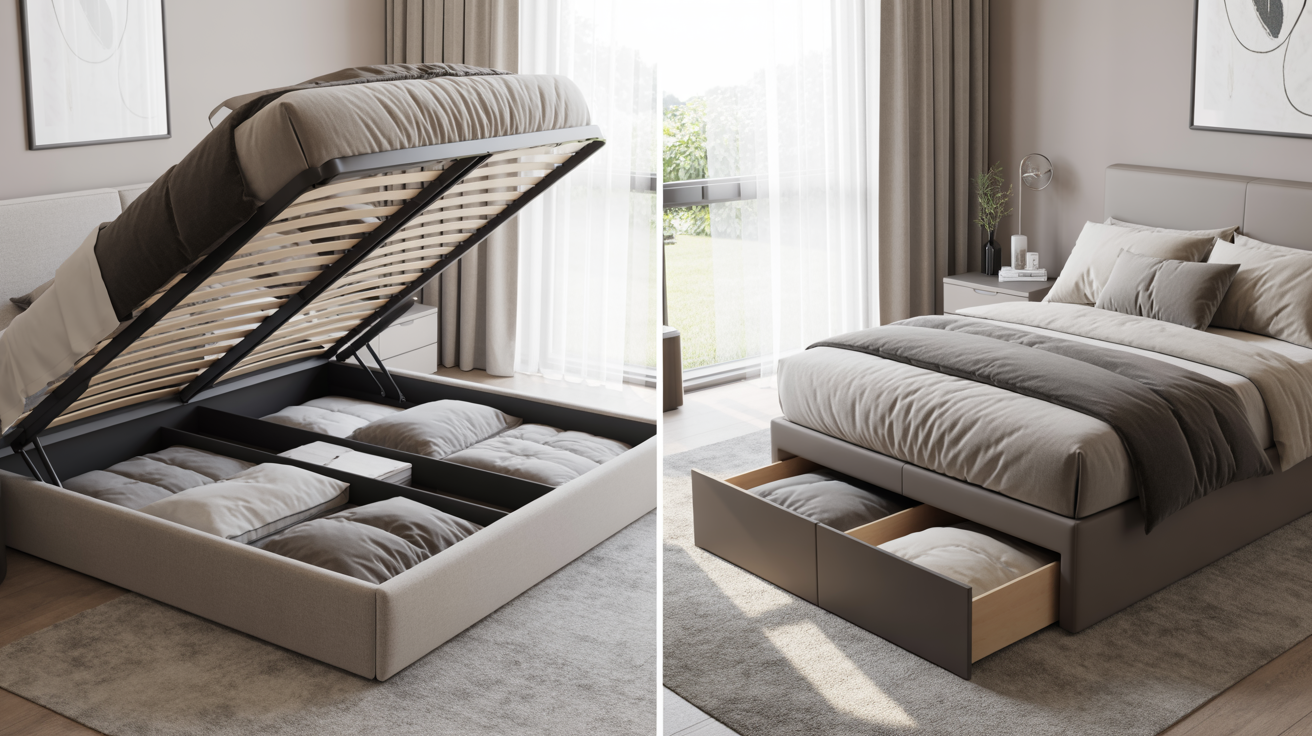
Table Of Contents
- Introduction
- What Are Storage Beds?
- Hydraulic Storage Beds: Mechanism & Features
- Drawer Storage Beds: Mechanism & Features
- Space Efficiency Comparison
- Cost Comparison & Value Analysis
- Lifespan & Durability Factors
- Installation & Maintenance Requirements
- Which Storage Bed Is Best For Your Situation?
- Conclusion
In today's compact living spaces, every square inch matters. Storage beds have revolutionized how we think about bedroom functionality, offering clever solutions to maximize limited space. When shopping for a storage bed, you'll typically encounter two main options: hydraulic lift beds and drawer storage beds. Each offers distinct advantages in terms of space utilization, cost, and longevity.
While both types serve the same fundamental purpose—providing extra storage without sacrificing floor space—their mechanisms, accessibility, price points, and durability vary significantly. Understanding these differences is crucial for making an informed purchase decision that aligns with your specific needs, space constraints, and budget.
In this comprehensive comparison, we'll explore the intricate details of hydraulic and drawer storage beds, analyze their space efficiency, break down their cost components, and examine factors affecting their lifespan. By the end, you'll have a clear understanding of which storage bed type represents the best investment for your unique living situation.
What Are Storage Beds?
Storage beds are innovative furniture pieces designed to solve the eternal challenge of limited bedroom space. Unlike conventional beds that waste the volume beneath the mattress, storage beds transform this otherwise unused area into valuable storage compartments. They've gained immense popularity, especially in urban apartments and smaller homes where maximizing space efficiency is essential.
The primary appeal of storage beds lies in their dual functionality—they provide both a comfortable sleeping surface and practical storage without requiring additional floor space. This multifunctional design eliminates the need for separate storage furniture like dressers or chests, allowing for a more streamlined bedroom layout and reducing clutter.
Storage beds come in various designs, but hydraulic lift and drawer storage beds represent the two most common configurations on the market. While both serve the same fundamental purpose, their mechanisms and accessibility features differ significantly, influencing their suitability for different users and living situations.
Hydraulic Storage Beds: Mechanism & Features
Hydraulic storage beds utilize gas lift mechanisms—similar to those found in office chairs—to easily raise the entire mattress platform, revealing a large, unobstructed storage compartment beneath. The hydraulic pistons do the heavy lifting, allowing you to effortlessly access the storage area with minimal physical effort.
The defining characteristic of hydraulic beds is their full-platform lifting mechanism. When activated, the entire mattress and platform rise from the foot end, pivoting upward to reveal a spacious cavity that typically spans the bed's entire footprint. This design creates a single, expansive storage area rather than divided compartments.
Key Features of Hydraulic Storage Beds
The hydraulic mechanism's strength lies in its ability to support substantial weight while requiring minimal effort to operate. High-quality pistons can easily lift a heavy mattress plus bedding, with most models designed to remain securely in the raised position until manually lowered. This hands-free operation makes hydraulic beds particularly valuable for users who need to access storage frequently or have mobility limitations.
Most hydraulic beds feature robust wooden or metal frames with reinforced corners to accommodate the mechanical stress of frequent lifting. The storage compartment typically includes ventilation features to prevent moisture buildup and maintain proper air circulation around stored items.
Safety features are another critical aspect of hydraulic bed design. Premium models incorporate anti-slam mechanisms to prevent accidental dropping, along with safety locks that secure the bed in the raised position during use. The storage area often features dust-protection elements like fabric liners or sealed edges to keep stored items clean.
Drawer Storage Beds: Mechanism & Features
Drawer storage beds feature integrated drawers built into the bed frame, typically positioned along the sides and sometimes at the foot of the bed. Unlike hydraulic models, drawer beds don't require lifting the mattress to access storage. Instead, storage access is compartmentalized through multiple pull-out drawers that operate independently.
These beds utilize traditional drawer sliding mechanisms, often with smooth-gliding hardware such as ball-bearing slides or soft-close features. The configuration varies widely between models, with some offering two to four large drawers while others provide multiple smaller compartments designed for different storage needs.
Key Features of Drawer Storage Beds
The compartmentalized approach of drawer storage beds offers excellent organization potential. Different-sized drawers allow for categorized storage—smaller drawers for accessories and larger ones for bulkier items like extra bedding or seasonal clothing. This organized approach eliminates the need to rummage through a single large storage area to find specific items.
Most drawer storage beds feature solid wood or engineered wood construction with reinforced drawer bottoms to support heavier items. The drawer interiors often include smooth finishes or fabric linings to protect delicate contents, while the exteriors may match the bed frame's aesthetic with decorative handles or minimalist designs.
Accessibility is a significant advantage of drawer beds. Since accessing the storage doesn't require moving the mattress, these beds offer convenience for daily use items. The drawers can be accessed without disturbing someone sleeping on the bed, making them practical for shared sleeping arrangements. Additionally, the independent drawer system means that even if one drawer mechanism fails, the others remain functional.
Space Efficiency Comparison
When evaluating storage beds purely from a space utilization perspective, hydraulic designs generally offer superior volume efficiency. By utilizing the entire area beneath the mattress as a single compartment, hydraulic beds provide approximately 25-30% more storage volume than comparable drawer models. This advantage stems from the absence of dividing walls between compartments and the utilization of spaces that would be inaccessible in drawer configurations.
A standard queen-size hydraulic bed typically offers 25-30 cubic feet of storage, while drawer models of the same dimensions provide around 18-22 cubic feet spread across multiple drawers. This volume difference can be significant for storing larger items or maximizing overall storage capacity in very small apartments.
Storage Accessibility Considerations
While hydraulic beds offer more raw storage volume, drawer beds provide better-organized access to stored items. With drawer beds, you can access specific compartments without disturbing the entire storage system—simply pull out the relevant drawer. This feature makes drawer beds particularly valuable for items you need to access regularly.
Hydraulic beds excel at storing larger, bulkier items or collections of seasonal items accessed infrequently. The unobstructed storage cavity can accommodate items that wouldn't fit in standard drawers, such as large suitcases, comforters, or sports equipment. However, accessing items stored at the back of the compartment means lifting the entire bed mechanism and potentially removing other items first.
For rooms with space constraints, the bed's exterior footprint is another important consideration. Drawer beds typically require clearance space for drawer extension—approximately 24-30 inches of clear space alongside the bed for drawer operation. Hydraulic beds require clearance at the foot of the bed for the lifting mechanism but can be placed flush against walls on the sides, potentially saving valuable floor space in very narrow rooms.
Cost Comparison & Value Analysis
The price difference between hydraulic and drawer storage beds reflects their different mechanisms and construction complexities. Hydraulic storage beds typically command a 15-25% premium over comparable drawer models, primarily due to their more sophisticated lifting mechanisms and reinforced structural requirements.
At entry-level price points (approximately $500-700), drawer storage beds offer better initial value with reasonable quality materials and basic functionality. Mid-range options ($700-1,200) represent the sweet spot for both types, with hydraulic beds beginning to offer more refined mechanisms and drawer beds featuring premium sliding hardware and better construction quality. In the premium segment ($1,200+), both types offer exceptional craftsmanship, but hydraulic beds often incorporate more advanced features like adjustable tension settings and enhanced safety mechanisms.
Component Cost Breakdown
The cost difference primarily stems from the mechanical components. Quality hydraulic pistons and lifting mechanisms represent a significant portion of production costs for hydraulic beds. These specialized components require precision engineering and testing to ensure safe, reliable operation over thousands of cycles. Drawer beds utilize simpler sliding hardware that, while still contributing to cost, represents a less significant manufacturing investment.
Frame construction also influences pricing. Hydraulic beds require reinforced frames capable of withstanding the mechanical stress of frequent lifting and lowering. This necessitates stronger joints, thicker materials, and more robust support structures compared to drawer beds. Additionally, the safety mechanisms in premium hydraulic beds—anti-slam features, locking systems, and tension adjustments—add further to manufacturing costs.
When considering long-term value, it's important to factor in potential maintenance costs. Hydraulic mechanisms may require occasional adjustment or replacement after years of use, representing a higher long-term maintenance investment. Drawer slides generally have lower replacement costs should they wear out, though multiple drawers mean multiple potential failure points.
At Smart Living, we offer both hydraulic and drawer storage bed options at competitive prices by working directly with manufacturers—eliminating retail markups while maintaining high quality standards. This direct-to-consumer approach delivers better value regardless of which storage bed type you select.
Lifespan & Durability Factors
The longevity of storage beds depends heavily on their construction quality and usage patterns. With proper care, quality storage beds typically last 7-12 years, though this range varies significantly based on design type and materials used.
Drawer storage beds generally demonstrate slightly better overall longevity, averaging 8-12 years of reliable service compared to 7-10 years for hydraulic models. This lifespan difference stems from the mechanical complexity of hydraulic systems versus the simpler drawer mechanisms. However, premium hydraulic beds with high-grade pistons and reinforced lifting mechanisms can match or exceed the lifespan of average drawer beds.
Common Failure Points
For hydraulic beds, the most vulnerable components are the gas lift pistons, which may gradually lose pressure over time, reducing their lifting capacity. Quality hydraulic systems typically maintain optimal functionality for 5-7 years before showing signs of reduced performance. The pivot hinges represent another potential failure point, especially in models with inadequate reinforcement at stress points.
Drawer beds commonly experience wear in the drawer slides, particularly in lower-quality models using plastic components instead of metal ball-bearing systems. Drawer bottoms may sag under excessive weight over time, and frequent use can stress the drawer face attachments. However, these issues typically develop gradually and can often be repaired without replacing the entire bed.
Material Impact on Durability
Construction materials significantly influence both bed types' durability. Solid hardwood frames offer superior longevity but come with higher price tags. Medium-density fiberboard (MDF) and particleboard constructions, common in budget models, typically show wear more quickly, especially in humid environments or with frequent mechanical stress.
For hydraulic beds, the quality of the lifting mechanism is paramount. German and Italian hydraulic systems generally offer the best reliability, with precision engineering that maintains consistent performance through thousands of lifting cycles. Similarly, drawer beds benefit from quality hardware—full-extension, ball-bearing drawer slides provide smoother operation and greater longevity than basic friction slides.
Weight capacity also affects long-term durability. Exceeding the recommended weight limits—including both mattress and users—accelerates wear on both bed types. Most quality hydraulic systems support 600-800 pounds, while drawer bed weight capacity varies more widely based on construction methods and materials.
Installation & Maintenance Requirements
The installation complexity differs significantly between these storage bed types. Drawer storage beds typically feature simpler assembly with fewer components and mechanical considerations. Most models can be assembled by one or two people in 1-2 hours using basic tools. The process generally involves connecting the frame components, installing drawer slides, and assembling the drawers themselves.
Hydraulic beds present more complex installation challenges. Proper alignment of the lifting mechanism is crucial for optimal performance, and the pistons must be correctly calibrated for the mattress weight. Assembly typically requires 2-3 hours and benefits from having two people manage the heavier components and mechanical adjustments. Some premium models come with pre-installed mechanisms, simplifying the process considerably.
Ongoing Maintenance Needs
Maintenance requirements further differentiate these bed types. Drawer storage beds require minimal ongoing maintenance—occasional tightening of drawer hardware, lubricating slides every 1-2 years, and checking for loose components. The compartmentalized nature of drawer beds means that issues typically affect only one section at a time, allowing for isolated repairs without compromising the entire storage system.
Hydraulic beds benefit from more attentive maintenance to preserve their lifting functionality. The pistons may require occasional adjustment to maintain optimal lifting tension, particularly as they age. Hinges and pivot points should be lubricated annually to prevent squeaking and ensure smooth operation. Some users report needing to replace hydraulic pistons after 5-7 years of regular use, representing a more significant maintenance investment.
Environmental factors also affect maintenance needs. In humid environments, both bed types benefit from moisture-control measures to prevent wood warping or metal component corrosion. Hydraulic mechanisms are particularly sensitive to extreme temperature fluctuations, which can affect gas pressure in the pistons and alter lifting performance.
Which Storage Bed Is Best For Your Situation?
Choosing between hydraulic and drawer storage beds ultimately depends on your specific needs, space constraints, and usage patterns. Based on our analysis, certain scenarios favor one design over the other.
Hydraulic Beds Are Ideal For:
Small apartments with severe space limitations: The ability to store larger items and maximize storage volume makes hydraulic beds perfect for very compact living spaces where every cubic inch of storage matters. When paired with other space-saving furniture like a foldable dining table or Murphy bed for guests, hydraulic beds help maximize functionality in minimal square footage.
Storing bulky, seasonal items: If you need to store larger items like winter comforters, suitcases, or sports equipment that you access infrequently, the unobstructed storage cavity of hydraulic beds offers superior accommodation for these bulky items.
Single users or primary users with mobility considerations: The one-motion access of hydraulic beds, which requires minimal physical effort thanks to the gas lift support, makes them ideal for individuals with mild mobility limitations or those who prefer not to bend repeatedly to access multiple drawers.
Drawer Beds Work Better For:
Shared sleeping arrangements: Couples benefit from drawer beds' ability to access storage without disturbing a sleeping partner. This feature proves particularly valuable for partners with different schedules or sleep patterns.
Frequent access needs: If you need daily or weekly access to stored items, drawer beds offer more convenient, targeted access without needing to lift the entire mattress. This makes them perfect companions to other organizational furniture like a wardrobe or dressing table.
Organized storage preferences: Those who prefer categorized, compartmentalized storage will appreciate the natural organization offered by multiple drawers. This system allows for logical separation of items—smaller drawers for accessories and larger ones for clothing or linens.
Long-term investment focus: If durability and longevity are primary concerns, drawer beds typically offer slightly better long-term reliability with fewer mechanical components that might require maintenance or replacement.
Hybrid Solutions
Some manufacturers now offer hybrid models combining both storage approaches—featuring hydraulic lifting for part of the bed and drawers for the remainder. These designs attempt to capture the benefits of both systems but often come with higher price points and greater complexity. They work particularly well in children's rooms alongside other space-maximizing furniture like bunk beds or a bookshelf for study materials.
For versatile living spaces that transform between functions, hydraulic beds complement other convertible furniture like sofa beds or extendable tables. Meanwhile, drawer beds often work well alongside more permanent fixtures like shoe cabinets or TV consoles in more established living arrangements.
Conclusion
Both hydraulic and drawer storage beds offer valuable space-saving solutions with distinct advantages tailored to different living situations and storage needs. Hydraulic beds excel in raw storage capacity and accommodate larger items, making them ideal for severely space-limited environments or storing bulky seasonal items. Their one-motion access mechanism provides convenience, especially for individuals with mobility considerations.
Drawer storage beds, while offering slightly less total volume, provide superior organization and selective access without disturbing the entire bed. Their compartmentalized approach works better for items requiring frequent access, and their generally simpler mechanisms often translate to greater long-term durability with less maintenance.
When weighing cost against features, drawer beds typically offer better initial value at lower price points, while hydraulic beds provide superior space efficiency with a moderate price premium. For longevity, quality drawer beds generally edge out hydraulic models unless investing in premium hydraulic mechanisms.
Your ideal choice ultimately depends on your specific needs—storage volume requirements, access frequency, items being stored, and long-term durability expectations. By carefully considering these factors against your living situation, you can select the storage bed type that maximizes both functionality and value for your home.
Find Your Perfect Storage Bed Solution
At Smart Living, we offer a premium selection of both hydraulic and drawer storage beds at transparent, competitive prices. By working directly with manufacturers, we eliminate middlemen markups while maintaining exceptional quality.