Showroom vs Online Shopping: The Complete Total Cost of Ownership Breakdown
Jul 29,2025 | Smart-Living
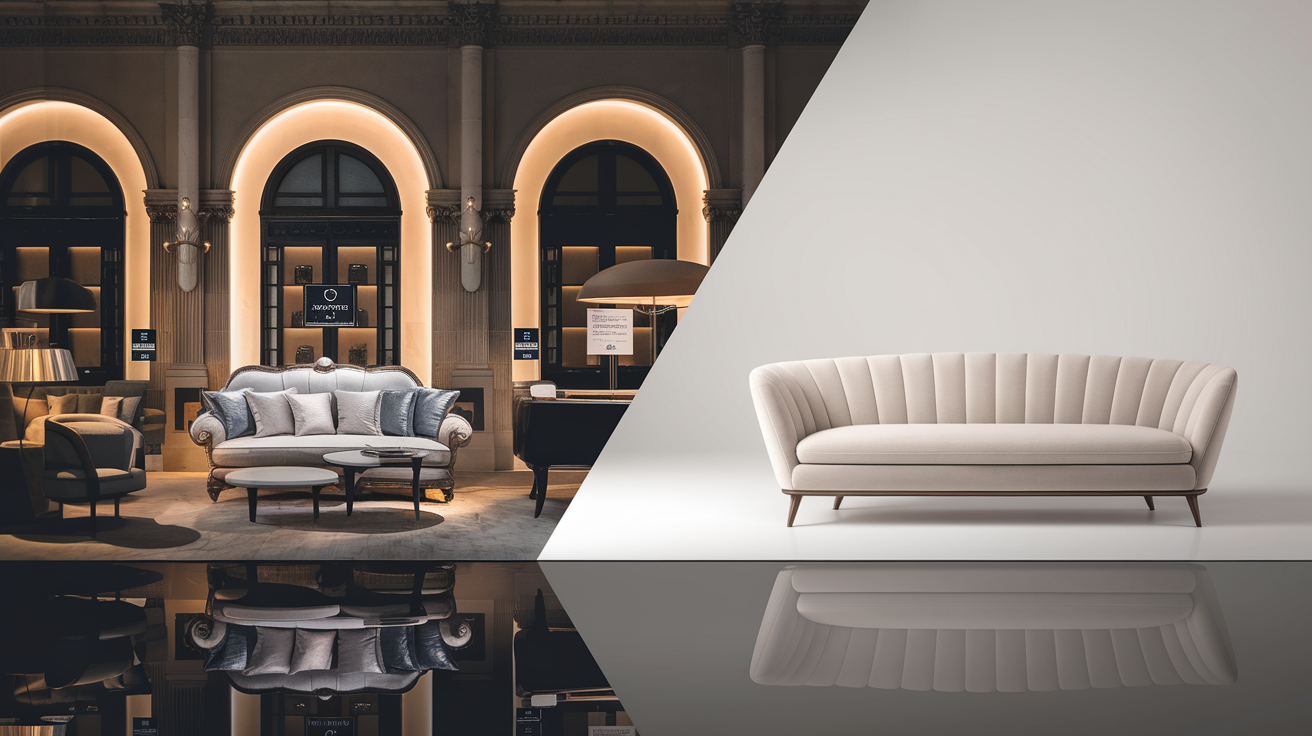
Table Of Contents
- Understanding Total Cost of Ownership in Furniture
- The Showroom Experience: Breaking Down All Costs
- Online Direct-to-Consumer: Complete Cost Analysis
- Direct Comparison: Showroom vs. Online Purchase Journey
- Hidden Costs You Might Not Consider
- Long-Term Value Considerations
- Conclusion: Making the Smart Choice for Your Home
When furnishing your home, the price tag you see is rarely the complete story. Whether browsing plush sofas in a high-end showroom or scrolling through options on your laptop, the total amount you'll ultimately spend extends far beyond that initial number. This comprehensive cost difference is precisely why the direct-to-consumer revolution has transformed how savvy shoppers approach furniture buying.
Traditional retail showrooms offer the tangible experience of testing furniture before purchasing, but this convenience comes at a significant premium. Meanwhile, online direct-to-consumer brands like Smart Living have disrupted the market by eliminating middlemen and passing those savings directly to customers—while still delivering premium quality products.
In this article, we'll conduct a thorough breakdown of the total cost of ownership for both shopping approaches. We'll examine not just the obvious price differences, but also the hidden costs, long-term value considerations, and the complete financial impact of each purchasing path. By understanding the true economics behind both options, you'll be equipped to make the most intelligent decision for your home and wallet.
Understanding Total Cost of Ownership in Furniture
Total Cost of Ownership (TCO) is a financial estimate designed to help consumers determine the direct and indirect costs of a product or system. When applied to furniture purchasing, TCO goes far beyond the initial price tag to include everything from delivery and assembly to maintenance and eventual replacement.
For furniture specifically, TCO typically encompasses:
- Purchase price - The advertised cost of the item
- Sales tax - Varies by location but adds a significant percentage
- Delivery fees - Often higher for showroom retailers
- Assembly costs - Professional assembly or the value of your time
- Financing costs - Interest paid if using credit options
- Maintenance expenses - Cleaning, repairs, and upkeep
- Replacement timeline - How soon you'll need to replace the item
Understanding TCO provides a much more accurate picture of what you're truly paying. This concept is particularly important when comparing traditional showroom shopping with the direct-to-consumer online model, as the difference in TCO can be substantially greater than the difference in sticker price alone.
The Showroom Experience: Breaking Down All Costs
The traditional furniture showroom model operates on a multi-tiered markup system that significantly increases what consumers pay. Let's break down where your money actually goes when purchasing from a showroom:
The Retail Markup Chain
When you purchase a $2,000 sofa from a showroom, that price typically reflects several layers of markup:
First, the manufacturer produces the sofa at a base cost—let's say $600. The manufacturer then applies their profit margin, selling it to a distributor for approximately $900. The distributor adds their margin and sells to the retailer for around $1,200. Finally, the retailer adds a substantial markup (typically 40-80%) to cover their overhead and profit, resulting in that $2,000 price tag you see.
This cascading markup system means showroom consumers are effectively paying for multiple businesses' profits and operational costs on a single furniture piece.
Showroom Operational Overhead
Those beautiful, spacious furniture showrooms come with considerable expenses that are ultimately passed on to consumers:
Prime retail locations command high rent—often $20-50 per square foot or more in desirable areas. Showrooms require significant staffing, from sales associates to managers to inventory personnel. Display models, regularly updated floor layouts, and extensive inventory all add to overhead costs. Finally, traditional retailers spend heavily on advertising through multiple channels to drive foot traffic.
All these expenses are built into the price structure, meaning customers subsidize the showroom experience whether they value it or not.
Additional Showroom Costs
Beyond the marked-up product price, showroom purchases typically incur several additional charges:
Delivery fees from traditional retailers often range from $100-300, with many charging by distance or item weight. White glove delivery service, which includes placement and basic setup, can add another $100-200. Professional assembly, if needed for complex pieces, typically costs $100-250 depending on the item. Extended warranties, aggressively pushed by showroom sales staff, add $100-500 to purchase costs while offering questionable value.
These supplementary costs can easily add 15-30% to the already inflated showroom price.
Online Direct-to-Consumer: Complete Cost Analysis
The direct-to-consumer model fundamentally reimagines the furniture supply chain, eliminating multiple cost layers that don't add value to the end product. Here's how online direct-to-consumer brands like Smart Living structure their pricing:
The Streamlined Supply Chain
Direct-to-consumer brands work directly with original design manufacturers, removing both distributors and traditional retailers from the equation. Using our previous example, a sofa with a $600 manufacturing cost might be priced at $900-1,200 by a direct-to-consumer brand—roughly half the showroom price for the same quality.
This approach strips away the layers of markup that don't contribute to product quality. Instead of paying for multiple businesses' profits, customers pay primarily for the actual product value plus a single reasonable profit margin.
Online Operating Efficiencies
Direct-to-consumer brands operate with fundamentally different business models that create significant cost advantages:
Instead of expensive retail locations, they maintain efficient warehouses in strategic locations. Digital showrooms replace physical ones, eliminating display model costs and allowing 24/7 browsing without staffing expenses. Inventory management is optimized with just-in-time systems that reduce holding costs. The business model emphasizes direct shipping from warehouse to customer, eliminating multiple handling and transportation stages.
These operational efficiencies translate directly to lower prices without sacrificing quality—the core promise of brands like Smart Living.
Digital Advantages in Pricing
The online direct-to-consumer model offers several additional cost benefits:
Shipping costs are often reduced or included in the product price. Many direct-to-consumer brands include free shipping for orders above certain thresholds. Assembly is typically designed to be straightforward for customers, with clear instructions and simplified designs. When professional assembly is needed, it's often available at lower rates than showroom options due to partnerships with local service providers.
Perhaps most importantly, direct-to-consumer brands typically practice transparent pricing. They openly share their cost structures and markups, giving consumers confidence they're paying fair prices rather than arbitrary markups.
Direct Comparison: Showroom vs. Online Purchase Journey
To illustrate the total cost difference, let's compare the purchase journey for a premium quality sectional sofa through both channels:
Showroom Purchase Journey
Starting with a $2,200 showroom price tag, your actual costs quickly escalate:
Add $150-300 for delivery, depending on your location. Professional assembly services cost another $150-250 for a sectional. An extended warranty, which sales associates strongly recommend, adds $300. If financing through the store's credit option (often advertised as "0% interest for 12 months"), missed payments or balances after the promotional period face 20-29% APR, potentially adding hundreds in interest.
Your total expenditure reaches approximately $2,800-3,050 before any potential financing costs. That's 27-39% above the already marked-up ticket price.
Online Direct-to-Consumer Journey
For a comparable quality sectional from Smart Living's home collection, your cost structure looks vastly different:
The base price for a premium quality sectional might be $1,200—already 45% less than the showroom price due to eliminated middlemen. Free shipping is typically included on furniture orders. The sectional is designed for straightforward customer assembly, though optional assembly services might be available for $100-150. The manufacturer's warranty is included without additional cost. Direct online purchase avoids financing charges unless using a personal credit card.
Your total expenditure rounds to approximately $1,200-1,350. That's 52-57% less than the total showroom cost for comparable quality.
Hidden Costs You Might Not Consider
Beyond the obvious price differences, several hidden costs and considerations affect the true total cost of ownership:
Time Value Considerations
Shopping at physical showrooms requires significant time investment: driving to multiple stores, navigating crowded showrooms, waiting for sales assistance, and often experiencing delivery delays of 8-12 weeks for non-stock items. The time spent coordinating delivery, potentially taking time off work to receive items, and arranging assembly all add invisible costs.
Online shopping allows comparison of dozens of options in minutes from anywhere. Smart Living's office furniture and other collections can be browsed efficiently during lunch breaks or evening hours. Many direct-to-consumer brands ship from existing inventory, reducing wait times to days rather than months.
Transportation and Convenience Factor
Showroom shopping carries additional costs often overlooked: fuel costs for driving to multiple stores, parking fees in urban areas, and potential meal expenses during all-day shopping trips. The opportunity cost of spending weekends shopping rather than with family or on other activities is substantial but rarely calculated.
Online shopping eliminates these transportation costs entirely. The convenience of shopping from home allows for more thoughtful decisions without sales pressure or time constraints. This also enables easier comparison between multiple options and brands.
Return Policies and Flexibility
Many consumers assume showrooms offer superior return options, but this isn't always true. Showroom retailers typically charge restocking fees of 15-25% for returns. Special orders or customized items are often non-returnable. Return windows are frequently limited to 7-30 days.
Leading direct-to-consumer brands have responded to concerns about buying unseen by offering generous return policies. Many offer 30-100 day trial periods—significantly longer than most showrooms. Free return shipping is increasingly common for online furniture retailers. Some even offer free return pickup from your home, eliminating the logistical challenges of returning large items.
Long-Term Value Considerations
The true total cost of ownership extends beyond the purchase to include the entire lifecycle of the furniture:
Quality and Durability Comparison
A common misconception is that showroom furniture offers superior quality. In reality, many direct-to-consumer brands like Smart Living partner with the same manufacturers used by premium showroom brands. Without the pressure to hit specific price points for different distribution channels, online brands can focus on durable materials and construction rather than maintaining artificial price tiers.
Quality direct-to-consumer brands provide detailed information about materials, construction methods, and durability testing. This transparency allows consumers to make more informed decisions about long-term value. Many online brands have eliminated the planned obsolescence common in showroom furniture tiers, focusing instead on timeless designs built to last.
Maintenance and Longevity
Furniture maintenance costs vary significantly based on quality and materials regardless of purchase channel. However, many direct-to-consumer brands emphasize practical, durable materials that require less ongoing maintenance—particularly in categories like Smart Living's appliances and home essentials.
Higher quality furniture typically lasts longer before requiring replacement, significantly impacting lifetime ownership costs. A sofa lasting 10+ years versus one needing replacement after 3-5 years dramatically changes the annual cost of ownership, even if the initial price was higher.
Resale Value Considerations
Furniture from recognizable direct-to-consumer brands often maintains stronger resale value due to their quality reputation and continued market presence. The transparent pricing model means buyers understand the original fair value, supporting stronger secondhand prices.
Meanwhile, showroom furniture with artificially inflated initial prices often suffers steeper depreciation. Generic showroom furniture from less-established brands can be particularly difficult to resell at reasonable values.
When calculating true ownership costs, the potential to recover 20-40% of the purchase price through resale for quality pieces should be factored into the total cost equation.
Conclusion: Making the Smart Choice for Your Home
When all factors are considered, the total cost of ownership difference between showroom and direct-to-consumer furniture is often far greater than the sticker price suggests. While showrooms offer the tangible experience of testing furniture before purchase, this convenience comes with a substantial premium that extends well beyond the initial price tag.
The multi-layered markup system of traditional retail, combined with showroom overhead costs and additional service fees, creates a significant cost burden that consumers ultimately bear. By contrast, the streamlined direct-to-consumer model eliminates these unnecessary expenses while maintaining or even improving quality, resulting in total cost savings that typically range from 40-60% for comparable products.
For today's value-conscious consumers, the direct-to-consumer approach offers a compelling alternative: premium quality, transparent pricing, convenient shopping, and substantially lower total cost of ownership. While showroom shopping remains appropriate for those who prioritize the in-person experience above all else, the financial advantages of purchasing directly from manufacturers through brands like Smart Living are too significant to ignore for the majority of furniture buyers.
By understanding the true economics behind both purchasing channels, you're now equipped to make more informed decisions about furnishing your home—decisions that balance quality, convenience, and cost in a way that brings the greatest long-term value.
When all factors are considered, the total cost of ownership gap between showroom and online direct-to-consumer furniture is substantial. Traditional retail channels layer multiple markups and fees throughout the purchase journey, creating a significant price premium that often doesn't translate to superior quality or value.
Smart Living's direct-to-consumer model eliminates these unnecessary costs while maintaining premium quality standards. By working directly with manufacturers and streamlining operations, they deliver exceptional furniture at 40-60% less than comparable showroom options. This approach doesn't just save money on the initial purchase—it reduces or eliminates delivery fees, simplifies assembly, provides transparent pricing information, and ultimately delivers better long-term value.
In today's market, savvy consumers recognize that the showroom experience, while tactile and immediate, comes with a substantial price tag that extends far beyond the sticker price. By contrast, online shopping through premium direct-to-consumer brands offers a more efficient, transparent, and economical path to creating a beautifully furnished home without unnecessary financial burden.
Ready to experience premium quality without the premium markup? Visit Smart Living today and discover how our direct-to-consumer approach delivers exceptional value for your home.
发表评论